

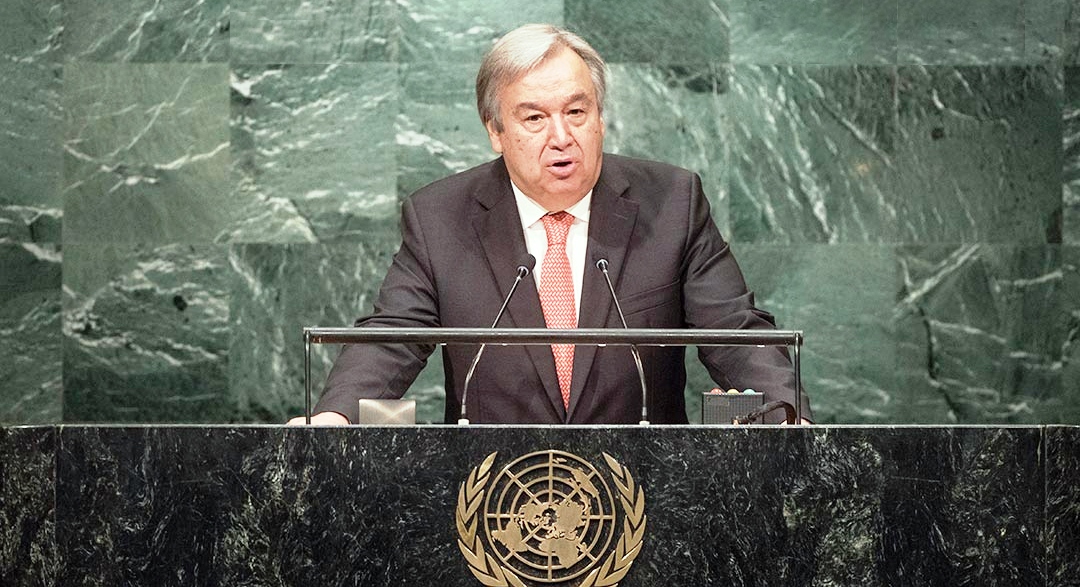
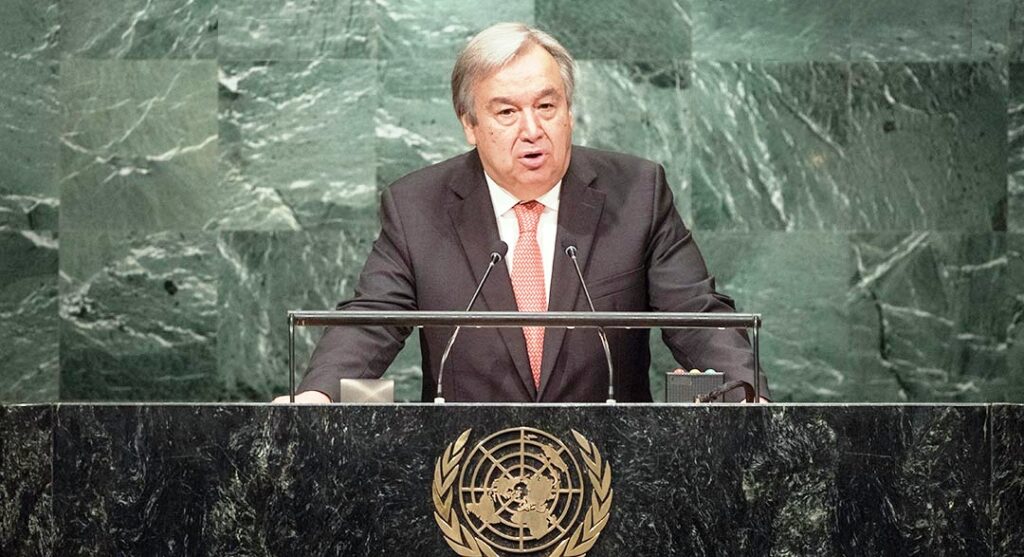
UN Secretary-General António Guterres, has called for accelerating action to achieve the SDGs in the five years that remain until 2030. PHOTO/UN
By PATRICK MAYOYO
Climate change is increasingly being recognised as the defining issue of our time, yet its impact extends far beyond environmental concerns. It has become a significant barrier to the successful implementation of the United Nations (UN) Sustainable Development Goals (SDGs).
These 17 global goals, designed to promote well-being for all, tackle issues such as poverty, education, gender equality, clean water, and climate action. However, climate change is severely undermining progress across these goals, particularly in the Global South, where its effects are felt most acutely.
The SDGs were established with a vision to create a more equitable, sustainable, and resilient world by 2030. However, climate change exacerbates existing inequalities, creating a vicious cycle in which vulnerable communities, particularly in Africa, are suffering the most.
As these communities struggle to adapt to the rapidly changing environment, progress towards many of the SDGs is being jeopardised.
Take, for example, the situation in Africa, where the impacts of climate change are becoming increasingly devastating. From floods and droughts to landslides and worsening food insecurity, the consequences of climate change are directly hindering progress on the SDGs.
The effects of extreme weather events, in particular, are derailing efforts to alleviate poverty and achieve sustainable development. The connection between climate change and poverty reduction (SDG 1) is undeniable. In rural areas, where agriculture is the primary source of income, extreme weather events such as droughts and floods directly destroy livelihoods.
These events not only result in economic losses but also push vulnerable populations deeper into poverty, undoing years of hard-earned progress. As agriculture becomes increasingly unreliable due to erratic weather patterns, the path to poverty eradication grows ever steeper.
Similarly, the link between climate change and food security (SDG 2) cannot be ignored. Climate-induced disruptions, such as erratic rainfall and prolonged droughts, are causing crop failures, driving up food prices, and reducing access to nutrition.
In many parts of Africa, where subsistence farming remains the mainstay of food production, these disruptions are devastating. Entire harvests are being wiped out by unseasonal rains or drought, undermining efforts to eliminate hunger and malnutrition.
Water scarcity (SDG 6) is another pressing issue exacerbated by climate change. Shifting rainfall patterns, reduced water availability, and the contamination of freshwater sources due to floods are creating severe water shortages across many regions.
Access to clean water, already a challenge in many parts of Africa, is becoming even more difficult, hampering progress towards achieving the goal of clean water and sanitation for all.
Health (SDG 3) is also under threat due to the rise in climate-related diseases. The spread of illnesses such as malaria and cholera is facilitated by warmer temperatures and extreme weather events. Flooding, for instance, contaminates water supplies, creating a breeding ground for waterborne diseases.
This not only places additional strain on already overburdened healthcare systems but also hinders efforts to achieve good health and well-being for all. As health risks increase, vulnerable populations are left more exposed to the impacts of climate change.
In urban areas, the growing frequency of extreme weather events such as floods, landslides, and heatwaves is undermining the goal of building sustainable cities and communities (SDG 11).
In many African cities, poorly planned urbanisation amplifies the risks posed by climate change. As these events intensify, the need for resilient infrastructure and sustainable development becomes even more urgent.
While the physical and environmental impacts of climate change are widely recognised, the psychological toll on affected populations is often overlooked. Climate anxiety is increasingly common, particularly among young people, who face an uncertain future in a rapidly changing world.

The 17 Sustainable Development Goals (SDGs. Infographic/UN
The psychological effects of climate change, including anxiety, stress, and depression, are becoming more widespread, yet they are seldom addressed in policy and adaptation strategies.
In African countries, where the physical impacts of climate change are already devastating, the psychological burden is compounded by economic stress and a sense of helplessness.
As communities watch their homes and livelihoods being destroyed by extreme weather events, their sense of security and hope for the future erodes. This psychological toll can weaken community resilience, making it harder for people to adapt and recover from climate-induced shocks.
Despite the clear link between climate change and the hindrance of SDG progress, funding for climate action remains woefully inadequate. Developed countries, which are historically responsible for the majority of carbon emissions, have pledged to provide financial support to developing nations, yet these promises are often not fulfilled.
The lack of sufficient financial resources hampers the ability of African countries and other vulnerable regions to invest in the necessary infrastructure, adaptation measures, and disaster response systems.
The global funding gap for climate adaptation and resilience-building is vast. Without a comprehensive, multi-dimensional approach to climate action, progress on the SDGs will continue to stagnate.
There is an urgent need for increased financial flows to support climate resilience projects, particularly in developing nations that are disproportionately impacted by climate change but have the fewest resources to cope with it.
Certain areas remain neglected in the broader climate discourse. For instance, the mental health impacts of climate change are largely ignored in climate action strategies. Addressing the psychological effects of climate change should be a priority in adaptation strategies, with increased access to mental health care and community-based interventions.
Women, especially those in rural and impoverished communities, bear the brunt of climate change. Climate action strategies often fail to recognise the intersectionality between gender and climate vulnerability. In many African countries, women are responsible for food production and water collection, and during times of drought or flooding, they face disproportionate burdens.
Gender-sensitive approaches to climate policy are essential for achieving the SDGs and ensuring that women are not left behind in the fight against climate change.
Young people, who are the future leaders and decision-makers, are often excluded from climate discussions. Involving youth in climate change mitigation and adaptation efforts can foster a sense of ownership and responsibility, while also encouraging innovative solutions to the challenges they will face in the future.
Climate change is not just a challenge for SDG 13 (Climate Action) — it is an obstacle that impacts all 17 goals. The consequences are felt most acutely in the Global South, particularly in Africa, where a lack of resources, infrastructure, and support exacerbates vulnerability. Urgent, coordinated action is needed on a global scale to address the physical, mental, and social impacts of climate change.
African countries, despite their adversity, continue to show remarkable resilience in the face of climate-induced challenges. However, this resilience must be supported through adequate financial resources, comprehensive policies, and greater recognition of the psychological toll of climate change.
Only by addressing both the physical and psychological impacts of climate change can we ensure that the SDGs are not further hindered and that we move closer to a sustainable and equitable future for all.