

Infographic/AEN
By PATRICK MAYOYO
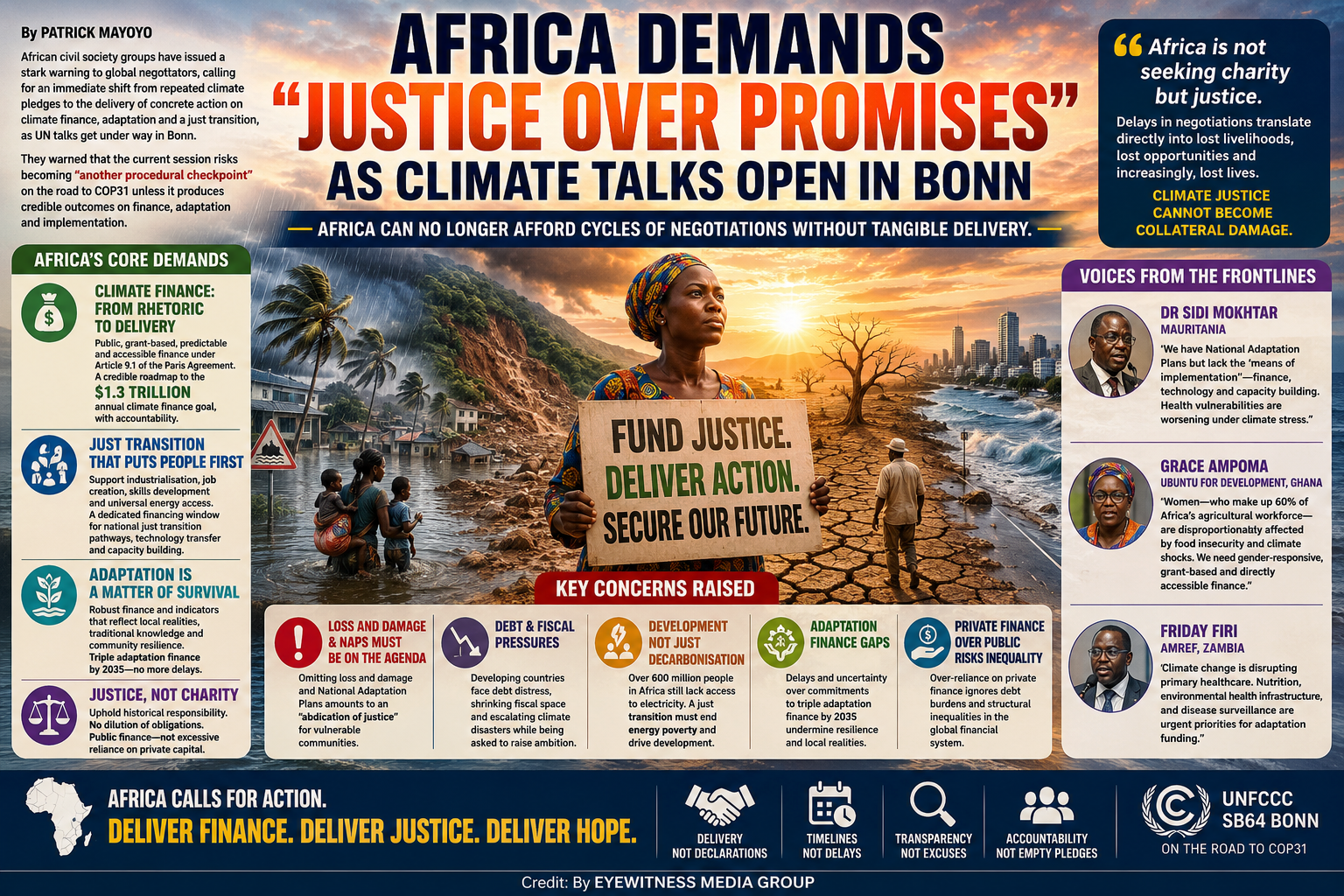
African civil society groups have issued a stark warning to global negotiators, calling for an immediate shift from repeated climate pledges to the delivery of concrete action on climate finance, adaptation and a just transition, as UN talks get under way in Bonn.
In a statement released by the Pan-African Climate Justice Alliance on behalf of African civil society organisations attending UNFCCC SB64 under the UNFCCC, campaigners said Africa could no longer “afford cycles of negotiations without tangible delivery”.
They warned that the current session risks becoming “another procedural checkpoint” on the road to COP31 unless it produces credible outcomes on finance, adaptation and implementation.
A central concern raised by African civil society is the omission of loss and damage, alongside National Adaptation Plans (NAPs), from draft agendas. They said excluding these items would amount to “abdication of justice”, particularly for vulnerable communities already facing worsening climate impacts across the continent.
At the heart of the demands is a call for climate finance to move “from rhetoric to delivery”. The groups argue that developing countries are being asked to raise ambition while simultaneously facing debt distress, shrinking fiscal space and escalating climate disasters.
They insist that funding under Article 9.1 of the Paris Agreement must be delivered as public, grant-based, predictable and accessible finance, and must go beyond existing development aid.
African civil society also called for a credible roadmap towards the emerging $1.3 trillion annual climate finance goal, with clear timelines, tracking systems and accountability mechanisms.
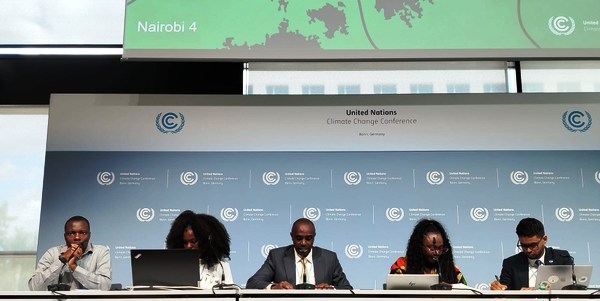
Pacja delegates at the Bonn meeting. PHOTO/PACJA.
The statement also warned against framing decarbonisation solely around emissions reductions, arguing that such an approach ignores development needs and energy poverty.
More than 600 million people in Africa still lack access to electricity, the groups noted, insisting that a just transition must support industrialisation, job creation, skills development and universal energy access.
They called for a dedicated financing window for national just transition pathways, alongside stronger commitments on technology transfer and capacity building.
“A just transition cannot become another unfunded aspiration,” the statement said.
African civil society also stressed that adaptation is “a matter of survival” for the continent, not an optional pillar of climate action.
They said the Global Goal on Adaptation must be backed by robust finance and indicators that reflect local realities, traditional knowledge and community resilience, rather than purely technical metrics.
They also criticised delays and uncertainty over commitments to triple adaptation finance by 2035.
The statement accused some developed countries of resisting legally grounded climate finance obligations and attempting to broaden the contributor base in ways that could dilute historical responsibility.
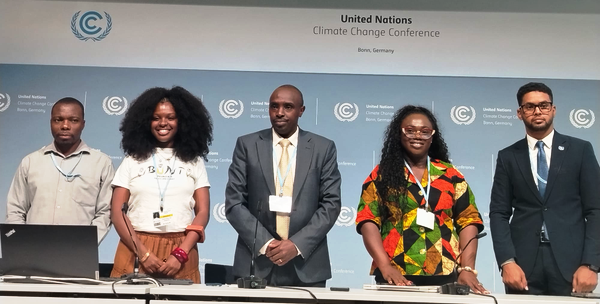
Pacja delegates at the Bonn meeting. PHOTO/PACJA.
It also criticised a growing emphasis on private finance over public funding, warning this risks ignoring debt burdens and structural inequalities in the global financial system.
Despite geopolitical tensions affecting negotiations, African civil society said climate justice “cannot become collateral damage”.
Speaking during the discussions, Dr Sidi Mokhtar of Mauritania said African countries already have National Adaptation Plans but lack the “means of implementation”, including finance, technology and capacity building. He warned that health vulnerabilities are worsening under climate stress.
Grace Ampoma of Ubuntu for Development in Ghana highlighted the gendered impacts of climate change, noting that women—who make up 60% of Africa’s agricultural workforce—are disproportionately affected by food insecurity and climate shocks. She called for gender-responsive, grant-based and directly accessible climate finance.
Friday Firi of Amref in Zambia focused on health systems, warning that climate change is disrupting primary healthcare. He identified nutrition, environmental health infrastructure, and disease surveillance as urgent priorities for adaptation funding.
The statement concluded that Africa is not seeking charity but justice, urging developed countries to demonstrate leadership aligned with their historical responsibility and current capacity.
It warned that delays in negotiations translate directly into “lost livelihoods, lost opportunities and increasingly, lost lives”, adding that the credibility of the global climate process depends on delivery, not declarations.