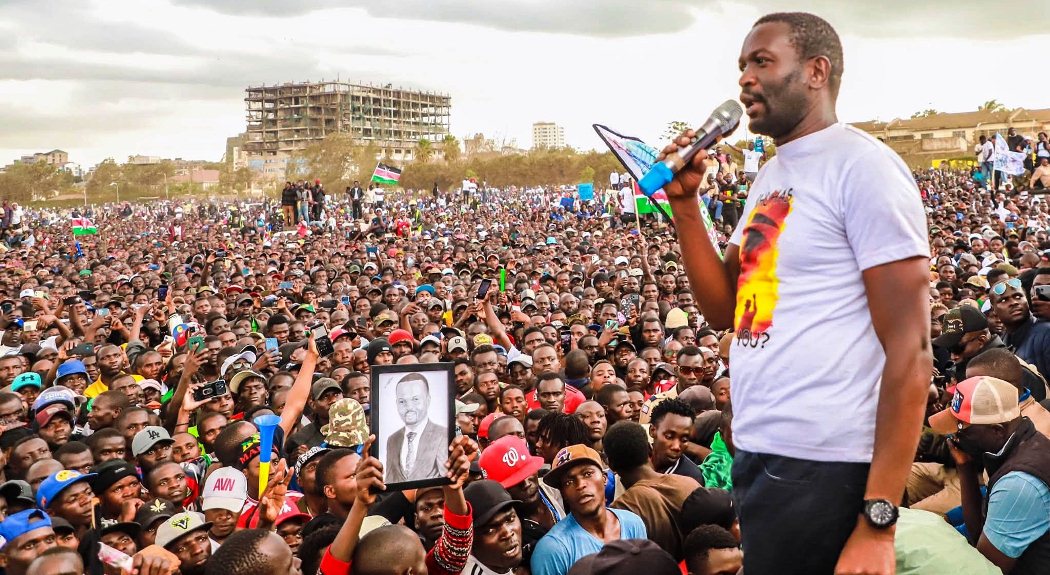


Nairobi Senator and Linda Mwananchi leader Edwin Sifuna speaking at Jacaranda grounds. PHOTO/UGC.
By PATRICK MAYOYO
There are moments in the life of a nation when politics ceases to be merely a contest for power and becomes a referendum on its future. Kenya is approaching such a moment.
As the country inches towards the 2027 General Election, a growing sense of frustration, despair and impatience is sweeping across towns, villages, estates and marketplaces. From Nairobi’s crowded estates to the dusty streets of Turkana, from the tea farms of Kericho to the fishing villages of Lake Victoria, millions of Kenyans are asking the same question: when will things get better?
The answer to that question may well depend on whether the opposition can remain united.
For many citizens, the next election is no longer simply about political parties, personalities or ethnic arithmetic. It is about survival. It is about whether ordinary Kenyans can continue enduring the burden of punitive taxation, shrinking incomes, rising unemployment and an increasingly difficult cost of living.
Parents are skipping meals so their children can eat. Young graduates wander the streets clutching certificates that seem to have lost their value. Small businesses are collapsing under the weight of taxes, levies and declining purchasing power. Farmers are struggling with rising production costs while consumers are paying more for basic commodities than ever before.
Against this backdrop, the opposition has become a symbol of hope for millions who believe Kenya deserves a different path. Yet that hope is now under threat.
Reports suggesting that some opposition leaders could be lured, persuaded or financially induced into abandoning the broader cause of opposition unity should alarm every Kenyan who believes in democratic accountability.
Whether those reports are true or not, the mere possibility exposes the fragility of Kenya’s political culture and raises uncomfortable questions about the motivations of some of the country’s political elite.
The names being mentioned are not political lightweights.
They include Wiper leader Kalonzo Musyoka, former Interior Cabinet Secretary Fred Matiang’i, Democratic Change Party (DCP) leader Rigathi Gachagua and Nairobi Senator Edwin Sifuna, who has increasingly emerged as a leading voice within the Linda Mwananchi movement.
Each commands a significant political constituency. Each represents a potential centre of power. Each has publicly criticised the Kenya Kwanza administration on issues ranging from governance and corruption to economic management and democratic accountability.
That is why any suggestion that opposition unity could be sacrificed on the altar of personal ambition, political convenience or financial inducement strikes at the heart of public trust.
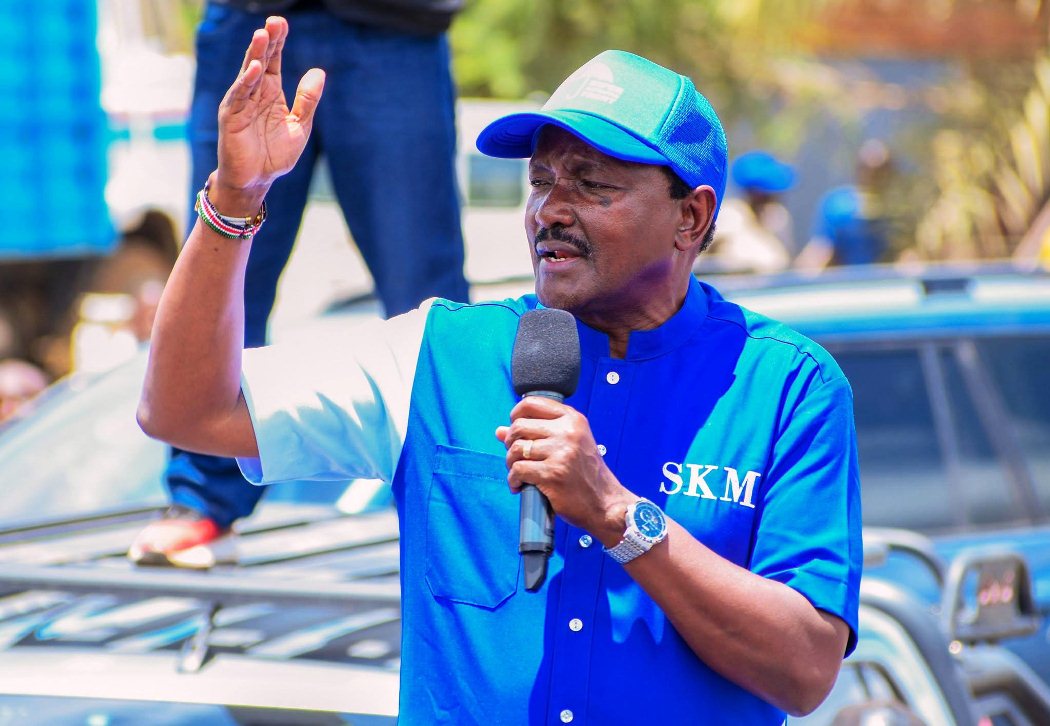
Wiper Patriotic Front presidential aspirant Kalonzo Musyoka. PHOTO/UGC.
The stakes could not be higher. History offers a painful lesson. Kenya’s opposition movements have often excelled at identifying national problems but failed when it came to sustaining unity. Time and again, opposition leaders have rallied together, inspired public enthusiasm and created momentum for change, only for personal interests, egos and political calculations to fracture the coalition at the decisive moment.
The result has often been the same: a divided opposition and a strengthened incumbent. That is precisely why 2027 cannot be approached as business as usual.
The Kenya of today is fundamentally different from the Kenya of previous election cycles. The country is younger. It is more connected. It is more politically aware. Most importantly, citizens are increasingly less interested in political slogans and more interested in results.
The emergence of Generation Z as a powerful political force has transformed the national conversation. Young people have demonstrated that they can organise, mobilise and challenge power structures without relying on traditional political machinery.
Their demands are simple but profound. They want jobs. They want accountability. They want transparency. They want a government that respects its citizens. They want public resources used for public benefit rather than private enrichment. And they are increasingly unwilling to accept excuses.
This is why any opposition leader contemplating a political deal that undermines unity should understand the magnitude of the public disappointment such a move would generate.
For many Kenyans, the struggle against corruption is not an abstract political debate. It is deeply personal.
Corruption is the reason hospitals lack medicine. It is the reason roads remain unfinished despite billions being allocated. It is the reason young people remain unemployed despite repeated government promises. It is the reason public debt continues to grow while public services continue to deteriorate.
Every shilling stolen from public coffers represents a classroom not built, a hospital not equipped and a family left behind. That is why allegations that stolen public resources could be used to finance political defections would provoke public outrage.
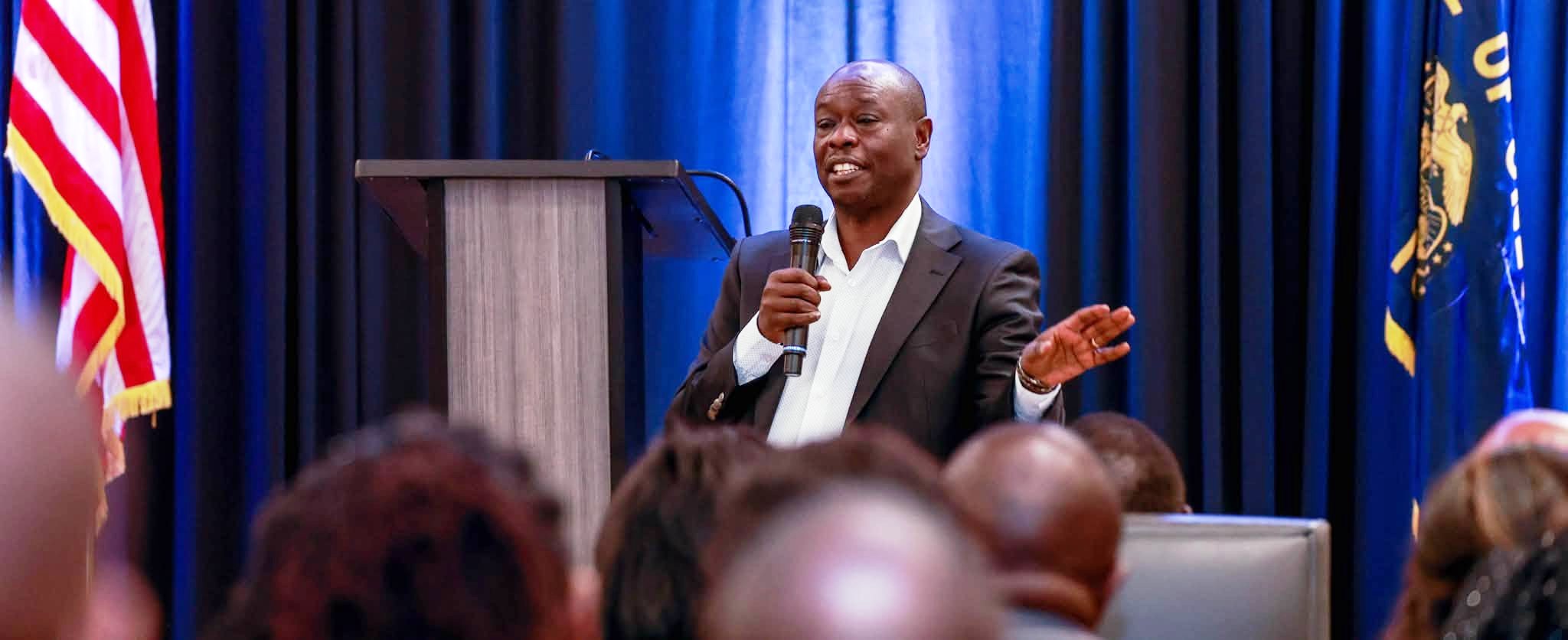
DCP party leader speaking to Kenyans based in the US. PHOTO/UGC.
If indeed opposition leaders were to abandon their cause in exchange for political favours, positions or financial rewards, it would represent more than a political betrayal.
It would constitute a moral betrayal. It would confirm the fears of many citizens who increasingly believe that some politicians do not oppose the system because they wish to reform it, but because they wish to inherit it.
That is a devastating conclusion for any democracy. After all, what is the difference between those accused of presiding over corruption and those willing to benefit from its proceeds?
What credibility remains when opposition becomes merely a negotiating tool for personal gain? What hope exists for citizens when leaders who claim to represent change are prepared to trade that change for a share of the spoils?
These are difficult questions, but they must be asked. Equally important, opposition leaders must recognise that unity does not require uniformity.
No one expects Kalonzo, Matiang’i, Gachagua and Sifuna to agree on everything.They come from different political traditions.They represent different constituencies.They have different strengths and weaknesses.
However, successful political coalitions are not built on perfect agreement.They are built on shared objectives. The objective before the opposition is straightforward. It is to convince Kenyans that there exists a credible alternative vision for the country.
That vision must go beyond opposing President William Ruto. It must articulate what comes next. How will corruption be tackled How will the economy be revived? How will jobs be created? How will public debt be managed?
How will independent institutions be protected? How will tribalism in public appointments be addressed? How will meritocracy be restored and how will the dignity of ordinary citizens be safeguarded?
These are the questions voters want answered. And they can only be answered convincingly through a united platform.
Fragmentation would serve only one purpose: preserving the status quo. Indeed, the greatest gift the opposition could hand the Kenya Kwanza administration would be division.
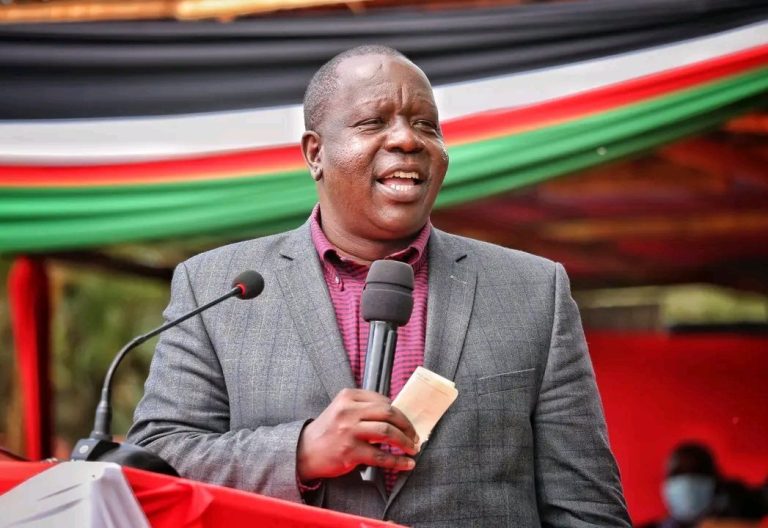
Former Interior Cabinet Secretary Fred Matiang’i and Jubilee Party presidential aspirant speaking at a past event. PHOTO/UGC.
Nothing strengthens an incumbent government more than a divided opposition competing against itself. Nothing weakens public confidence more than leaders who spend more time attacking one another than presenting solutions.
Nothing extinguishes hope faster than watching supposed agents of change become indistinguishable from the system they criticise. The reality is that Kenya’s next election may be less about political parties and more about trust.
Who can Kenyans trust? Who genuinely represents their interests? Who is prepared to sacrifice personal ambition for a larger national cause? Who can be relied upon when the pressure intensifies?
Those questions will define the road to 2027. Ultimately, opposition unity is not about Kalonzo, Matiang’i, Gachagua or Sifuna. And it is certainly not about political positions.
It is about millions of Kenyans who wake up every morning hoping for a better future. It is about the young graduate seeking employment. It is about the farmer struggling to make ends meet.
It is about the trader whose business is barely surviving. It is about the parent wondering how to pay school fees. It is about citizens who believe their country can do better.
Their aspirations should never be auctioned to the highest bidder.
If opposition leaders genuinely believe the country is headed in the wrong direction, then unity is not a strategic option. It is a moral obligation.
And if any of them choose to abandon that obligation for personal benefit, Kenyans will be justified in asking whether they ever stood for change in the first place. The lesson is simple.
The opposition has one opportunity to demonstrate that its commitment to reform is real. One opportunity to prove that its criticism of the current administration is based on principle rather than profit. One opportunity to convince Kenyans that it offers something fundamentally different.
That opportunity is called unity.