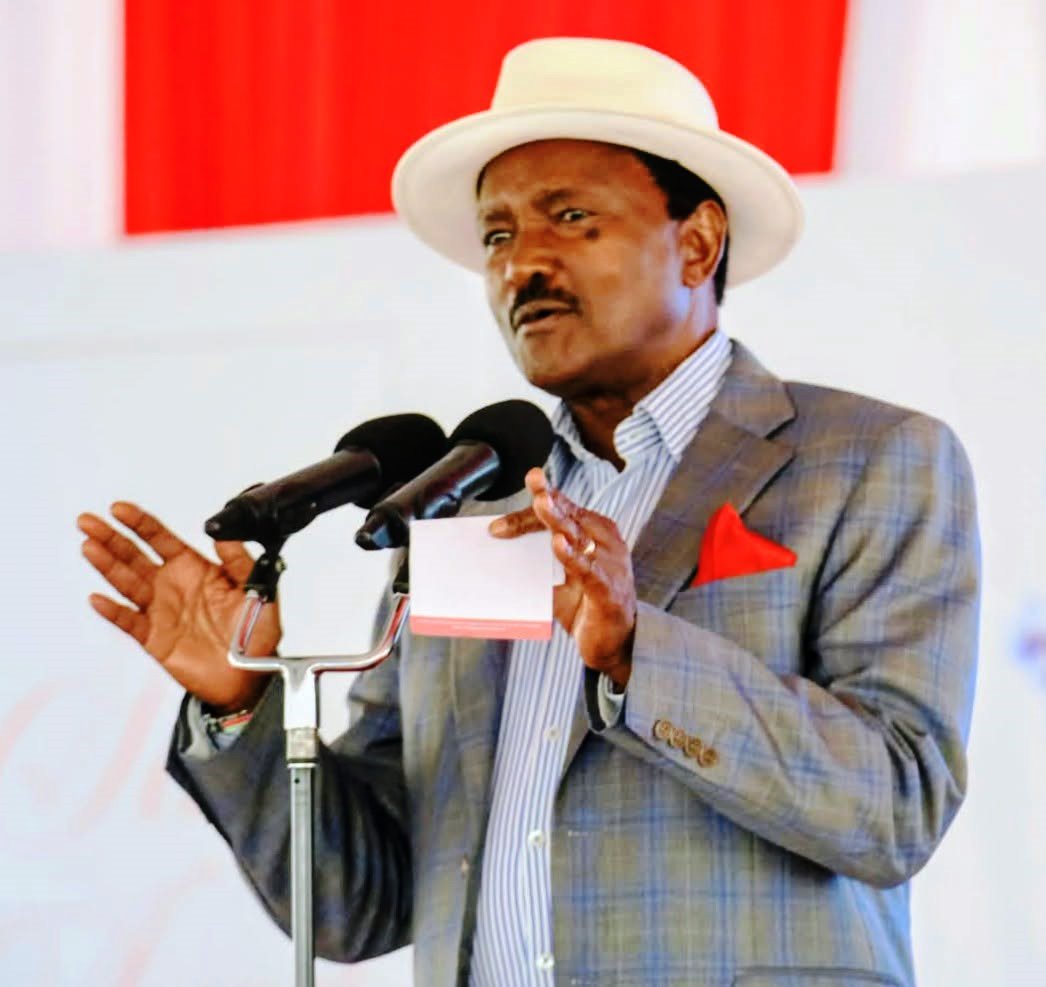


Wiper Patriotic Front leader Kalonzo Musyoka at a past event. PHOTO/UGC.
By PATRICK MAYOYO
The heckling of the Wiper Patriotic Front leader Kalonzo Musyoka, during the inauguration of Nairobi Senator Edwin Sifuna’s Linda Mwananchi Movement headquarters in Lavington, Nairobi, on 20 October 2026 has re-opened an uncomfortable question about his political future: what exactly are his next moves as the opposition struggles to identify a single presidential candidate to challenge President William Ruto in 2027?
What appeared to be an ordinary political gathering quickly turned into a revealing moment in the increasingly competitive battle for the United Opposition’s presidential ticket. Musyoka attended the event alongside several opposition leaders, including former Deputy President Rigathi Gachagua and DAP-K party leader Eugene Wamalwa.
However, the reception Musyoka received exposed the growing rivalry between his presidential ambitions and the emerging political influence of Sifuna.
The incident was particularly significant because Musyoka has spent much of his political career cultivating relationships, negotiating alliances and positioning himself as a consensus candidate. Yet, as the 2027 election approaches, the veteran politician is increasingly confronted with the possibility that his seniority and political experience may no longer guarantee him the opposition’s presidential ticket.
Opposition politics has entered a new phase following the emergence of Sifuna as a potential presidential contender. Several opinion polls conducted in 2026 have placed the Nairobi Senator among the leading opposition politicians capable of challenging Ruto, with some surveys suggesting that he has overtaken Musyoka.
This represents a significant development for the Wiper leader, who had previously positioned himself as one of the strongest opposition presidential contenders following the death of Raila Odinga in October 2025.
For decades, Musyoka has cultivated an image of a patient political negotiator, relying on his experience, regional influence and national relationships to remain relevant in successive political formations. Sifuna’s growing popularity, particularly among younger voters, presents a different kind of political challenge.
The tension became evident when Wamalwa, while addressing the gathering, declared Sifuna a presidential candidate. Musyoka immediately objected, arguing that such a declaration was premature because Sifuna remained a party leader until 13 November, when he would qualify to be referred to as a presidential candidate. The exchange prompted sections of the crowd to chant Sifuna’s name.
Musyoka then asked whether the audience wanted Sifuna to become President. The response was an emphatic yes. The Wiper leader reiterated that Sifuna was currently a party leader and would become a presidential candidate on 13 November when he holds his party’s National Delegates Convention (NDC), insisting that this was the correct procedure.
While his response could be interpreted as an attempt to uphold political and procedural discipline, the crowd’s reaction exposed the delicate position he occupies within the emerging opposition arrangement.
For a politician of his stature, the episode was undoubtedly uncomfortable. More importantly, it raised questions about whether he is prepared to accept the possibility that a younger political figure could become the opposition’s preferred presidential candidate.
Interestingly, this is not the first time Musyoka has experienced heckling at a major political gathering ahead of a General Election.
On 9 July 2007, during a mammoth ODM-Kenya rally at Tononoka Grounds in Mombasa, he was heckled amid disagreements within the opposition movement.
That incident preceded his decision to abandon the United Opposition arrangement and launch an independent presidential campaign under the slogan Kupita Kati Kati, meaning passing through the middle.
Musyoka went ahead with his presidential bid, finishing third behind Kibaki and Odinga in the disputed December 2007 election.
The circumstances surrounding the election subsequently led to the post-election violence of 2007–2008, which claimed more than 1,000 lives and displaced approximately 500,000 people.
In January 2008, Kibaki appointed Musyoka Vice-President and Minister for Home Affairs in the Grand Coalition Government.
The appointment attracted considerable political controversy because Musyoka had finished third in the presidential contest but was subsequently rewarded with the country’s second-highest executive office.
His political manoeuvre also earned him the moniker ‘watermelon’, a reference to perceptions that his political loyalties were difficult to define. Nearly two decades later, the heckling at Sifuna’s headquarters has revived memories of that episode.
The question now is whether history is about to repeat itself, with Musyoka using the incident as an opportunity to reconsider his position within the United Opposition and possibly pursue another political arrangement.
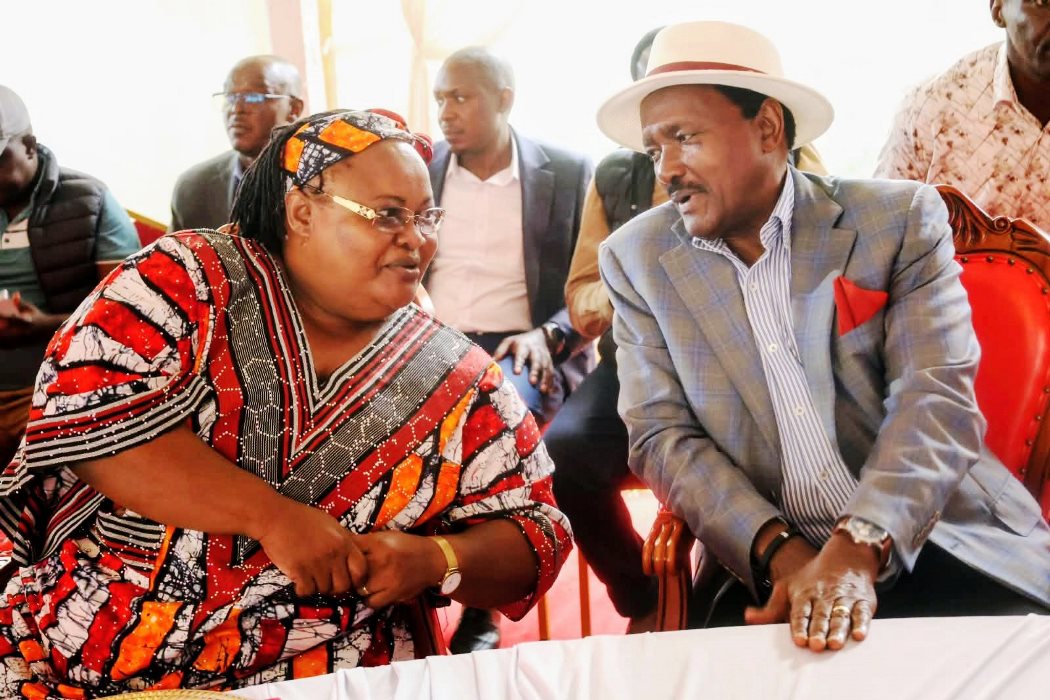
Wiper Patriotic Front leader Kalonzo Musyoka with a supporter at a past event. PHOTO/UGC.
There is no established evidence that the incident was stage-managed. Nevertheless, the circumstances surrounding it have generated speculation about whether certain political interests could benefit from Musyoka’s possible departure from the opposition.
One issue attracting attention is the speed with which politicians associated with President Ruto’s broad-based government condemned the treatment of Musyoka.
Several UDA and ODM figures, including Cabinet Secretaries Opiyo Wandayi, John Mbadi and Aden Duale, reportedly shared videos of the incident or criticised the crowd’s conduct.
Some government-aligned politicians have subsequently urged Musyoka to abandon the United Opposition and work with the broad-based government in support of Ruto’s re-election.
Their intervention raises an interesting political question: why are politicians aligned with the President so concerned about the treatment of an opposition leader?
The obvious explanation is that Musyoka remains an influential politician whose support could significantly affect the balance of power in 2027.
His traditional Ukambani constituency is politically important, while his experience in government and national coalition-building makes him an attractive potential partner.
There are also reports of a possible political understanding between Ruto’s UDA and Musyoka, allegedly facilitated through former Machakos Senator Johnstone Muthama, a member of UDA who recently met the Wiper leader.
The reported proposal involves Musyoka contesting the presidency in 2027 before working with Ruto through a possible coalition government arrangement after the election.
These claims should be treated cautiously in the absence of a publicly confirmed agreement. However, the reported contacts have intensified speculation about the possibility of a political deal between the two leaders.
A rapprochement would not necessarily be unprecedented in Kenyan politics, where ideological differences have frequently been subordinated to electoral calculations and negotiations over government positions.
Musyoka’s relationship with Sifuna’s political formation is also complicated by disagreements over political branding and the proposed use of the name Ukombozi.
Before settling on The Equitable Party (TEP), Sifuna’s political associates reportedly explored the possibility of rebranding the late Cyrus Jirongo’s United Democratic Party (UDP) as Ukombozi People’s Party (UPP).
However, the name became the subject of a competing political claim after Musyoka’s Azimio la Umoja coalition moved towards adopting The Ukombozi Alliance (TUA). The dispute remains the subject of legal proceedings.
Although the disagreement may appear administrative, political party names and identities carry considerable symbolic value in an election cycle. They help define political movements, communicate their message and establish ownership of particular political narratives.
The contest therefore reflects a deeper struggle over who will lead the emerging opposition movement and command the political space associated with political change.
It has to be noted that when Musyoka disagreed with Raila following the Tononoka rally heckling, he fled with the certificate of ODM-Kenya forcing the late ODM party leader to seek an alternative ODM party.
To understand the significance of the current developments, it is necessary to appreciate Musyoka’s political background.
Born on 24 December 1953 in Tseikuru, present-day Kitui County, he is among Kenya’s longest-serving politicians. He studied law at the University of Nairobi before obtaining a postgraduate diploma from the Kenya School of Law and pursuing further studies in business management.
He entered Parliament in 1985 after winning the Kitui North by-election, having lost his first attempt in 1983.
His political rise was rapid. He served as Assistant Minister for Works, Housing and Physical Planning, Deputy Speaker of the National Assembly and KANU’s National Organising Secretary during the Moi administration.
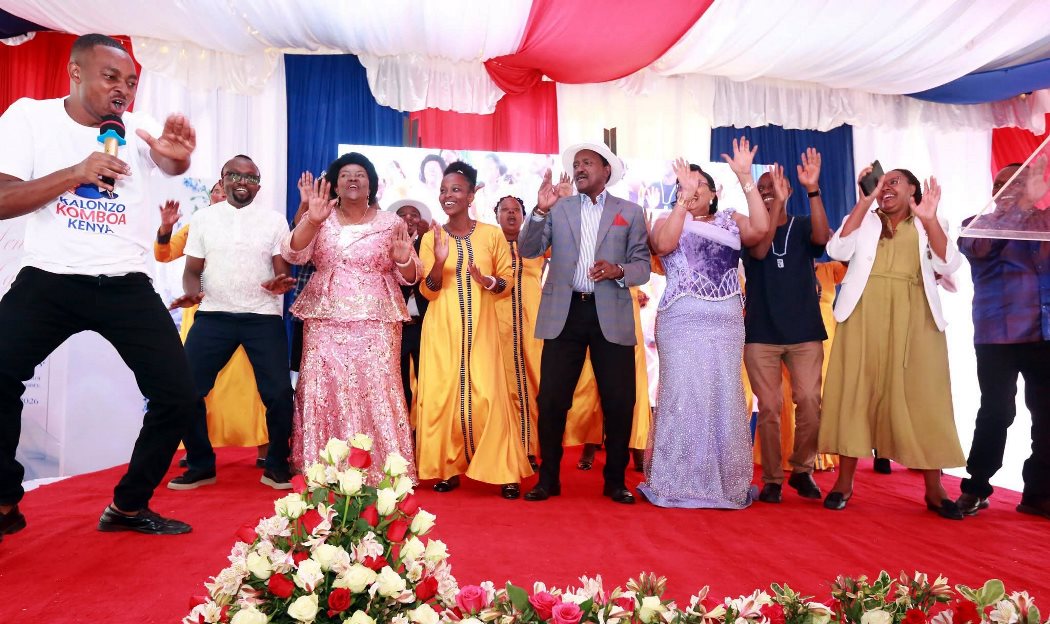
Time to relax for the Wiper Party leader. PHOTO/UGC.
In 1993, he was appointed Minister for Foreign Affairs and International Cooperation, a position that gave him international exposure through diplomatic engagements and regional peace initiatives. He subsequently served in other Cabinet positions, including Education and Tourism.
However, Musyoka’s presidential ambitions eventually brought him into conflict with KANU’s succession arrangements ahead of the 2002 General Election. He left the ruling party and joined the Raila led Liberal Democratic Party (LDP), which became part of the NARC coalition that brought Kibaki to power.
His first presidential campaign in 2007 ultimately led to his appointment as Vice-President, a position he held until 2013.
This experience established him as one of the few Kenyan politicians to have occupied the country’s second-highest executive office while maintaining an enduring ambition to become President.
Perhaps the most consequential political decision of Musyoka’s career was his repeated willingness to support Odinga’s presidential campaigns.
In 2013, he accepted the position of running mate under CORD. In 2017, he again became Odinga’s running mate under NASA.
The second arrangement was particularly important because a memorandum of understanding signed on 30 April 2017 reportedly provided that Odinga would serve one presidential term and endorse Musyoka as his successor in 2022.
However, the political rapprochement between Odinga and Kibaki’s successor, Uhuru Kenyatta, following the March 2018 Handshake complicated the succession arrangement.
When Odinga eventually contested the 2022 election under Azimio, he selected Martha Karua as his running mate, effectively ending Musyoka’s hopes of becoming deputy president.
Musyoka initially pursued his own presidential ambitions but eventually abandoned his candidature on 2 June 2022 and rejoined Azimio. The coalition subsequently lost to Ruto and Rigathi Gachagua.
The experience exposed a recurring weakness in Musyoka’s political strategy: repeatedly placing his presidential ambitions in the hands of another leader.
Although his alliances with Odinga gave him national visibility and access to wider political constituencies, they also left him repeatedly waiting for an opportunity that never materialised.
Odinga’s death in October 2025 fundamentally changed the political landscape, creating an opportunity for Musyoka to pursue the presidency without having to negotiate his place alongside his longtime political partner.
That is why the current competition with Sifuna is particularly important. Musyoka may consider the 2027 election his best remaining opportunity to realise an ambition he has pursued for decades.
Despite the recent heckling, my assessment is that Musyoka is unlikely to abandon the United Opposition without exhausting the available opportunities for a negotiated political settlement.
His political character has been shaped by consultation, patience and coalition-building. He understands that the presidential contest requires more than the support of Ukambani voters.
The 2026 opinion polls illustrate both his political strengths and vulnerabilities. TIFA placed him at 19 per cent in May before recording 13 per cent in June. Politrack and Research 8020 subsequently placed him at 10.3 per cent and 11 per cent respectively in September, while Mizani Africa reported a substantially higher 27.5 per cent.
Although the surveys are not directly comparable, they demonstrate that his national support remains competitive but uncertain. He therefore needs a broader political coalition to challenge Ruto effectively.
An agreement with Gachagua could connect his Ukambani constituency with Mount Kenya political networks. Cooperation with Sifuna could help him reach younger voters, while an understanding with other opposition leaders could broaden his national appeal.
The difficulty is that these potential partners also have their own political ambitions. Consequently, Musyoka must decide whether to insist on the presidential ticket, accept a negotiated alternative or pursue an independent campaign.
There is, however, another possibility that deserves serious consideration. If Musyoka decides to support another opposition presidential candidate in 2027, he could negotiate a clear political understanding that positions him as the coalition’s joint presidential candidate in 2032 should the opposition lose to Ruto.
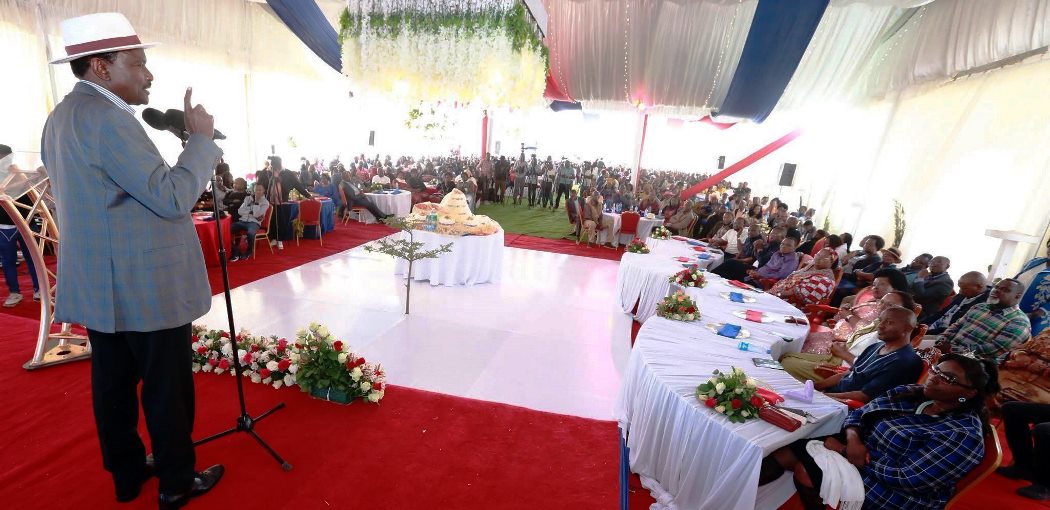
Kalonzo Musyoka addressing a meeting. PHOTO/UGC.
At 72, he still has an opportunity to shape the country’s political future beyond the next General Election. Supporting a single opposition candidate in 2027 could also help establish a legacy as one of the politicians who placed national interests above personal ambition in an effort to end Ruto’s presidency after one term.
Such an arrangement would require considerably stronger guarantees than those he reportedly relied upon in his previous partnership with Odinga.
It would also require him to resist the temptation of short-term political rewards, particularly appointments or promises of positions in a possible coalition government.
The alternative would be to contest independently, even if doing so risks splitting opposition support and improving Ruto’s chances of re-election.
Kenyan politics is full of examples of politicians who have dramatically changed their positions after entering government. Several ODM leaders who previously criticised Ruto and his Kenya Kwanza administration have become enthusiastic supporters of the broad-based government, demonstrating how quickly political alliances can transform.
Musyoka must decide whether he wants to follow a similar path or distinguish himself through consistency and a clearly articulated political vision.
The heckling at Sifuna’s event may eventually prove to have been nothing more than an unfortunate episode at a politically charged gathering. But its significance lies in what it reveals about the growing competition for leadership within the opposition.
For Musyoka, the choice is no longer simply between remaining friends with Sifuna or pursuing the presidency independently. It is about defining the political legacy he wants to leave behind.
Having served in Parliament for decades, occupied senior Cabinet positions and held the Vice-Presidency, he has accumulated considerable political experience. What remains uncertain is whether he can convert that experience into an independent national electoral movement.
My assessment is that Musyoka will ultimately support whichever candidate the United Opposition settles on, provided there is a credible and mutually acceptable political understanding.
But he must negotiate from a position of strength and ensure that any agreement protects his political interests rather than reducing him to another presidential running mate without a clear succession arrangement.
The 2027 election offers him an opportunity to demonstrate political maturity, statesmanship and an ability to put the country’s future ahead of personal ambition.
If he succeeds in helping unite the opposition and defeat Ruto, he could secure a legacy that goes beyond his unsuccessful presidential campaigns.
If he chooses another political detour, however, the familiar nickname of ‘watermelon’ may once again dominate the political conversation.
Ultimately, the question is not whether Musyoka can survive another political storm. His four decades in Kenyan politics have already demonstrated that he can.
The real question is whether, after repeatedly stepping aside for other presidential candidates, he is finally prepared to make a decision that defines his legacy rather than simply prolongs his political survival.