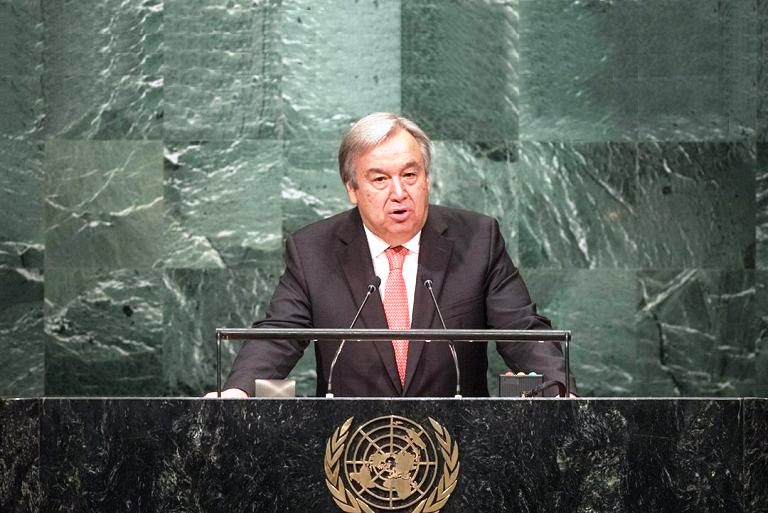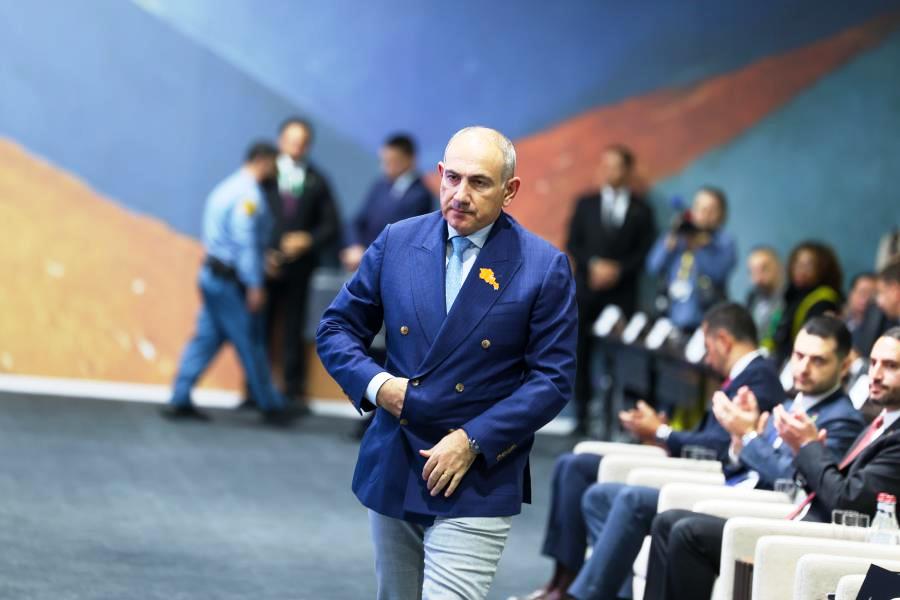


Nikol Pashinyan, Prime Minister of Armenia. PHOTO/ IISD/ENB – Mike Muzurakis.
By PATRICK MAYOYO
Governments gathering for the 2026 United Nations Biodiversity Conference face a critical test: whether international commitments to halt and reverse the destruction of nature can be translated into measurable progress before the end of the decade.
The conference, which opened in Yerevan, Armenia, today, will host the first global review of collective progress in implementing the Kunming-Montreal Global Biodiversity Framework (GBF). Adopted in 2022, the agreement sets out 23 targets for 2030 and four long-term goals for 2050.
The review comes at a pivotal moment. Although countries have made progress in establishing national biodiversity commitments, implementation remains uneven. The global assessment of biodiversity action brings together national reports and other evidence to examine how far countries have progressed towards the framework’s objectives.
The challenge for delegates is therefore less about agreeing on the scale of the biodiversity crisis than about determining what governments must do differently to meet their existing commitments.
The conference’s opening ceremony was held on Sunday, 18 October, and was followed by a reception hosted by the Armenian government featuring cultural performances. Speakers emphasised the links between biodiversity, human prosperity and international co-operation.
Nikol Pashinyan, Armenia’s prime minister, said a leaders’ summit held on 16 October had reaffirmed that biodiversity conservation must remain a priority on the international political agenda. He said the conference provided an opportunity to focus efforts on tangible results, accelerate the implementation of existing commitments and create new avenues for co-operation.
Ararat Mirzoyan, Armenia’s foreign minister, stressed the importance of the United Nations and multilateralism at a time of heightened geopolitical tensions. He highlighted the Armenian presidency’s responsibility to build trust among participating countries, bridge differences and advance shared objectives.
Astrid Schomaker, executive secretary of the Convention on Biological Diversity (CBD), called for an action-oriented conference that would demonstrate the effectiveness of multilateral co-operation, reinforce the credibility of international commitments and advance efforts to address the interconnected crises of biodiversity loss, climate change and pollution.
David Olarte Amaya, Colombia’s vice-minister for environmental territorial planning, speaking on behalf of the presidency of the 16th Conference of the Parties, highlighted the Coalition of Action to Recover Endangered Species (CARES), launched by Colombia and Armenia.
The coalition seeks to align national efforts with Target 4 of the GBF, which calls for urgent action to halt human-induced extinctions, protect genetic diversity and manage human–wildlife interactions.
Hambardzum Matevosyan, Armenia’s environment minister and president-designate of COP17, also underlined the importance of the initiative. He urged delegates to approach negotiations with mutual respect and open dialogue, arguing that governments share a responsibility to protect nature for future generations.
The wider stakes extend beyond conservation. Biodiversity underpins food production, water security, human health and economic activity, while the degradation of ecosystems creates risks for businesses, financial institutions and communities that depend on natural resources.
For governments, the Yerevan meeting offers an opportunity to establish a clearer picture of where progress is being made, where commitments are falling short and which obstacles require urgent political intervention.
The central question is whether the first global review can provide the basis for a more credible and co-ordinated response — one that matches the scale of the commitments made in Montreal with the resources, policies and practical action needed to deliver them by 2030.

CBD Executive Secretary Astrid Schomaker. PHOTO/ IISD/ENB – Mike Muzurakis.
The global review is a central element of COP17, taking place in Yerevan from 19 to 30 October 2026. It is intended to assess collective progress in implementing the framework, including the financial and technical support needed to meet its targets. Its findings should help governments identify gaps between their commitments and their implementation efforts, and establish priorities for accelerating action.
The process begins with the collection and assessment of evidence. Countries’ seventh national reports, updated national biodiversity strategies and action plans, national targets and scientific assessments provide the foundation for evaluating progress.
Information from Indigenous peoples and local communities, businesses, cities, civil society and other stakeholders can also help build a more comprehensive picture of implementation. By March 2026, 125 countries had submitted their seventh national reports by the February deadline, providing an important body of evidence for the review.
The next step is to assess that evidence against the framework’s 23 targets. The global assessment, State of Biodiversity Action, brings together national submissions and other information to identify achievements, implementation gaps and barriers to progress.
The aim is to establish a shared understanding of how far the world has advanced towards the 2030 objectives and which areas require urgent attention.
Delegates must then consider how to respond to the findings. Negotiations are expected to address the principal obstacles to implementation, including inadequate financing, limited technical capacity, gaps in scientific co-operation and inconsistent policies across economic sectors.
The participation of governments, businesses, Indigenous peoples, local communities and civil society will be important in ensuring that the response reflects the different responsibilities and capacities of those involved.
A further priority is to establish a credible pathway for accelerating implementation. The conference is expected to consider a Yerevan Pathway aimed at translating the review’s findings into practical action.
Its significance will depend on whether it establishes clear priorities, strengthens co-operation and addresses the shortcomings identified by the assessment, rather than simply restating commitments already made.
The process will not end with the conference. Governments will need to translate its conclusions into domestic policies, investment decisions and implementation measures, with progress monitored through the framework’s reporting and assessment arrangements.
A second global review is scheduled for COP19, providing a subsequent opportunity to determine whether collective action has improved.
The Kunming–Montreal Global Biodiversity Framework was adopted in December 2022 under the Convention on Biological Diversity. Its overarching mission is to halt and reverse biodiversity loss by 2030, while supporting the sustainable use of biodiversity and the fair and equitable sharing of benefits arising from genetic resources. Its longer-term vision is a world living in harmony with nature by 2050.
The framework covers conservation, ecosystem restoration, species protection, sustainable production and consumption, and the mobilisation of financial resources.
One of its most prominent commitments is to conserve at least 30 per cent of the world’s land, inland waters and coastal and marine areas by 2030. Another calls for at least 30 per cent of degraded terrestrial, inland-water, coastal and marine ecosystems to be under effective restoration by the same year.
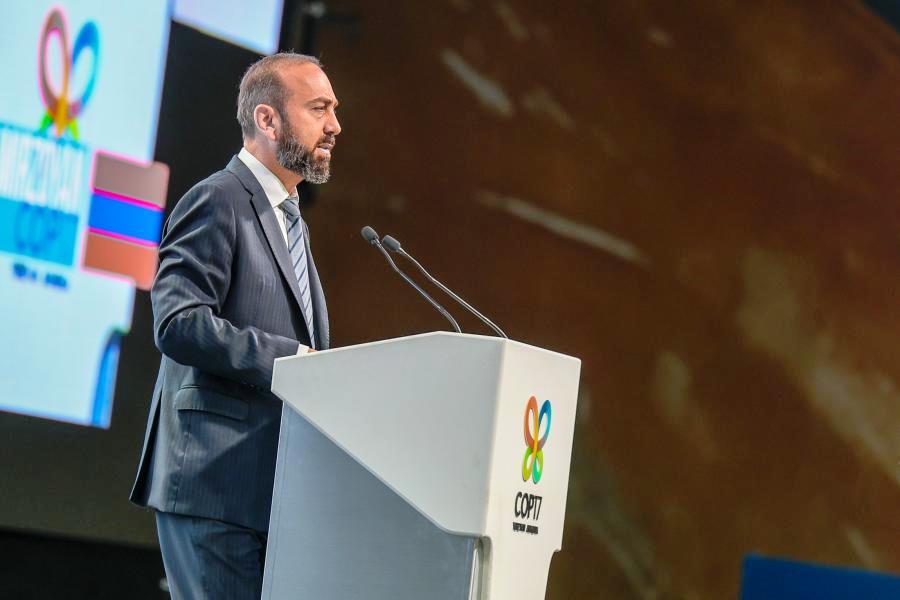
Ararat Mirzoyan, Minister of Foreign Affairs, Armenia. PHOTO/ IISD/ENB – Mike Muzurakis.
The agreement also seeks to halt human-induced extinctions of known threatened species, support the recovery of species and protect genetic diversity. These objectives are intended to address the underlying causes of biodiversity loss, rather than simply limit the damage to individual habitats or species.
Finance is another critical element. The framework calls for the mobilisation of at least $200bn a year for biodiversity from all sources by 2030, including increased international biodiversity finance for developing countries. It also sets a target of eliminating, phasing out or reforming incentives harmful to biodiversity, while scaling up positive incentives, with reductions in harmful incentives of at least $500bn a year by 2030.
These commitments are closely connected. Protected areas and restoration programmes cannot deliver their full benefits without adequate funding, effective governance and changes to the economic activities driving nature loss. Progress will also depend on incorporating biodiversity considerations into agriculture, fisheries, infrastructure, finance and business decisions.
The first global review will be significant because it shifts the international process from agreeing on a common framework towards assessing whether countries are delivering on their promises. Its value will depend on the quality of the evidence, the candour with which governments confront implementation gaps and their willingness to respond with concrete measures.
The first test is whether national commitments are producing measurable results. Governments need to distinguish between targets announced on paper and demonstrable improvements in ecosystem health, species protection and the pressures driving biodiversity loss. National reports can provide a basis for comparison, but their findings must translate into practical decisions and measurable outcomes.
The second test is finance. Delegates will need to confront the gap between the resources required to meet global ambitions and the funding available. This includes the responsibilities of developed countries, the role of international financial institutions and the contribution private investment can make without undermining environmental objectives.
The third test is whether governments are willing to address the economic incentives that continue to encourage activities harmful to nature. Conservation policies will struggle to succeed if public spending, investment decisions and regulatory frameworks continue to support the destruction of ecosystems.
Finally, the conference must demonstrate that the review can change the course of implementation. The Yerevan Pathway will be most consequential if it provides a credible response to identified shortcomings and strengthens accountability for delivery.
The stakes extend well beyond environmental policy. Biodiversity loss threatens the natural systems on which food production, water supplies, economic development and human wellbeing depend. The framework provides a common international benchmark, but its success rests largely on action by individual countries and co-operation across governments, businesses and communities.
Yerevan therefore presents an opportunity to move beyond declarations of intent. With the 2030 deadline approaching, the central challenge is to turn the first global assessment into a more focused and adequately financed programme of action.
Whether governments can do so will help determine the credibility of the biodiversity framework and the prospects for reversing the decline of nature within this decade.