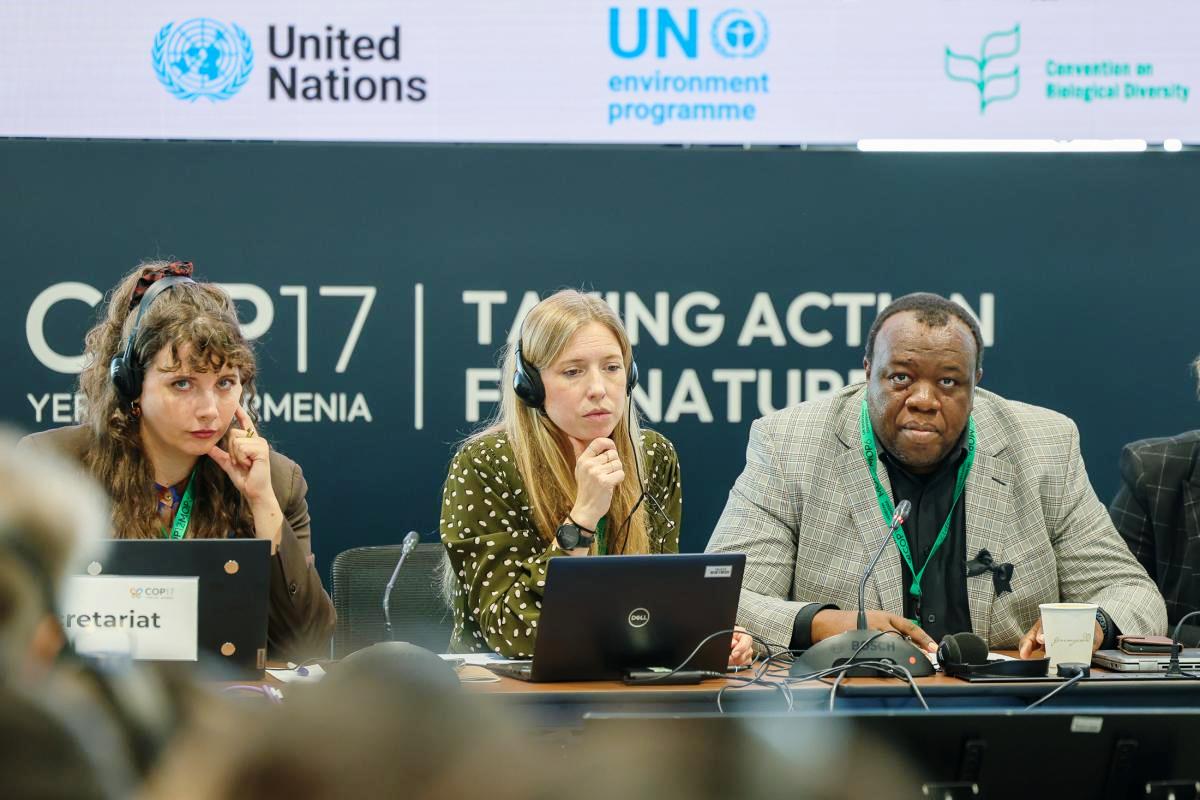


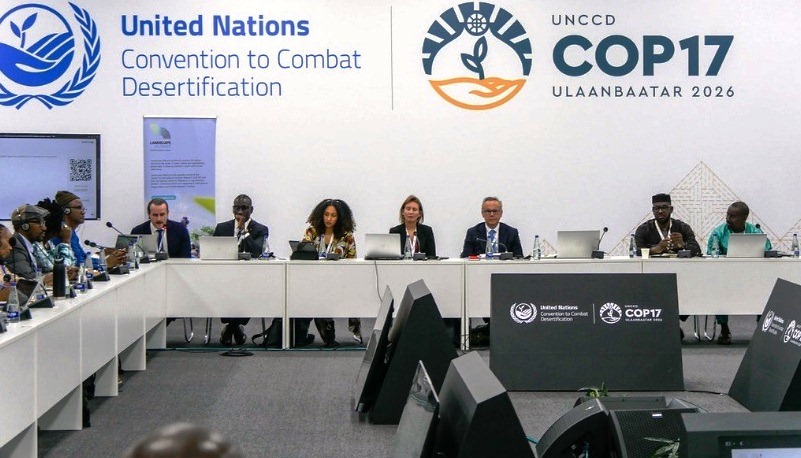
A session at the 17th Conference of the Parties (COP-17) of the UN Convention to Combat Desertification in Ulaanbaatar, Mongolia. PHOTO/UNCCD.
By PATRICK MAYOYO
The African Development Bank has committed to work with partners to mobilise funds for the Great Green Wall Initiative (GGWI) during the 17th Conference of the Parties (COP-17) of the UN Convention to Combat Desertification in Ulaanbaatar.
The commitment came on 24 August as African ministers, development partners and international organisations participating in an event titled Scaling the Great Green Wall through Continental Integration and the AU GGWI Strategy (2024-2034) and co-organised by the African Union (AU), the African Development Bank and the UN, voiced calls to scale up GGWI.
Participants also welcomed the AU’s adoption in 2024 of the Great Green Wall Strategy and Ten-Year Implementation Framework (2024–2034), which provides a roadmap to expand the initiative into a continental platform for land restoration and climate resilience.
The Great Green Wall Initiative, launched by the African Union in 2007, is a pan-African effort that originally spanned 11 countries across the Sahel with the goal of restoring 100 million hectares of degraded land, create 10 million green jobs and sequester 250 million tonnes of carbon by 2030.
Under the African Union’s Great Green Wall Strategy and Ten-Year Implementation Framework (2024–2034), the initiative is now expanding into new regions
United Nations Deputy Secretary-General Amina J. Mohammed noted that the Great Green Wall was conceived as “one vision, one Africa,” with an emphasis on people as much as landscapes.
While climate change and conflict have made implementation more challenging, she pointed to successful experiences in Senegal, Chad and Djibouti among other countries as proof of the initiative’s capacity to deliver results across the continent.
Mohammed also urged governments and partners to recommit to implementation, increase investment and place women and young people at the heart of the initiative.
Doumbia Mariam Tangara, Mali’s Minister of Environment, Sanitation and Sustainable Development, speaking for the Pan-African Agency of the Great Green Wall, called the initiative a chance to make it Africa’s leading platform for nature-based solutions, with environmental, climate, economic and social benefits at once.
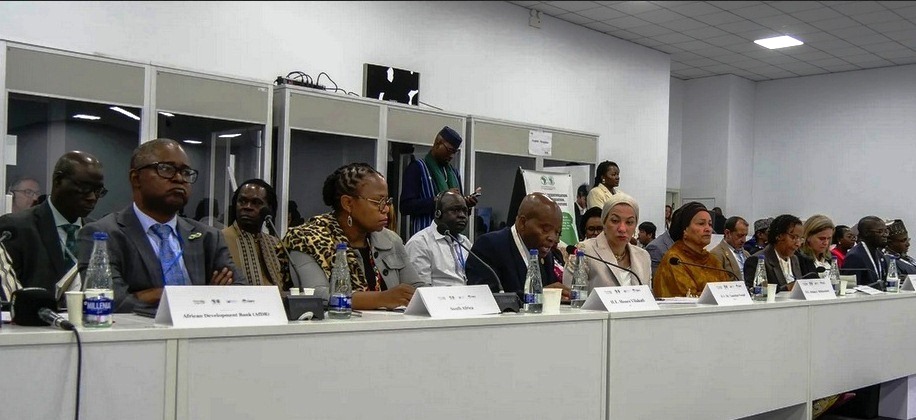
Speakers at the Great Green Wall Initiative (GGWI)high-level talks. PHOTO/AfDB.
UNCCD Executive Secretary Yasmine Fouad highlighted GGWI’s flexibility to specific country contexts, noting that “no one size fits all.” She said the initiative continues to evolve with support from the African Union, the African Development Bank and development partners.
“Africa’s Great Green Wall is ready to move from ambition to investment and from investment to impact,” AU Commission Commissioner Moses Vilakati said.
Mr Vilakati noted that Africa has lost 163 million hectares of land to degradation since 2015. The Great Green Wall faces a financing gap of around USD 14 billion to achieve its 2030 objectives.
Laoauli Garba, African Development Bank Manager for Agriculture Research, Production and Sustainability represented Bank Group president Dr. Sidi Ould Tah. He praised the AU’s new continental strategy for the Great Green Wall as an opportunity to scale up investment and accelerate implementation across Africa.
During a Finance Day Ministerial Dialogue held earlier in the day, the African Development Bank Group announced that, under the Ecosystem Restoration in the Zambezi River Basin (BREFOLE-ZRB) programme, it will mobilise USD 500 million between 2027 and 2031, in partnership with the Global Environment Facility (GEF), the Climate Investment Funds (CIF), the Green Climate Fund (GCF) and eight participating countries.
The programme aims to strengthen the resilience of 2.8 million people across eight countries in the basin, restore 300,000 hectares of degraded land and create 40,000 jobs for women and young people.
It will also support the Southern Africa Great Green Wall Accelerator by developing regional investment plans and a pipeline of bankable projects across the Southern African Development Community (SADC).
“Every hectare restored means a more productive asset, stronger food security, new opportunities for women and young people, and more resilient communities. That is why the African Development Bank sees the Great Green Wall as an investment in Africa’s economic future,” Garba said.
In his remarks, Juan Carlos Mendoza, Director of IFAD’s Environment, Climate, Gender and Social Inclusion Division, outlined three priorities for accelerating implementation: translating national commitments into bankable investment pipelines, allocating risk strategically to unlock financing, and designing programmes that create markets while measuring meaningful development outcomes.