

Climate and biodiversity crises are interconnected and require coordinated government action. PHOTO/GREENPEACE.
By PATRICK MAYOYO
Greenpeace has urged governments attending the UN Biodiversity Conference (CBD COP17) to move beyond acknowledging failures and adopt concrete measures to halt biodiversity loss and prevent irreversible ecosystem collapse, warning that the world is falling dangerously behind its 2030 nature protection targets.
The environmental organisation said the summit must deliver decisive action on financing, harmful subsidies and policies driving the destruction of nature, as governments prepare to assess collective progress under the Kunming-Montreal Global Biodiversity Framework (KM-GBF).
Four years after the framework was adopted, CBD COP17 will conclude the Convention’s first Global Review of progress towards its goals and targets, providing a critical assessment of whether countries are on course to meet their commitments.
An Lambrechts, head of the Greenpeace delegation to CBD COP17, said the world was halfway to the 2030 deadline but remained far off track to achieve the target of protecting 30 per cent of the planet’s land and waters.
“The systems that sustain life on Earth are under threat, and decisions made at COP17 must deliver a clear course correction to protect our planet’s ecosystems,” Lambrechts said in a statement.
She called on governments to agree on practical measures to tackle the drivers of biodiversity loss, increase funding for conservation and redirect financial flows towards protecting nature.
Lambrechts also warned that international commitments would have little impact without action at national level, urging governments to end the contradiction between pledges to protect biodiversity and continued support for activities that damage ecosystems through harmful subsidies and inconsistent policies.
“Any more delay is a threat to our survival on the planet,” she said.
The 30-by-30 target, which calls for at least 30 per cent of the world’s land and waters to be conserved by 2030, is among the most prominent commitments under the global biodiversity framework.
Greenpeace, however, stressed that the success of the target should not be measured by the area placed under protection alone. Conservation efforts must also preserve ecosystem integrity, prevent habitat loss and degradation, and recognise the rights and leadership of Indigenous Peoples and local communities.
Nichanan Tanthanawit, Ocean Justice Campaign global project lead, said conservation policies must be rooted in justice and equity, with communities that have protected lands and waters for generations placed at the centre of decision-making.
She urged governments to recognise Indigenous and Traditional Territories as distinct conservation systems, secure customary land and resource tenure rights, and provide direct funding for community-led conservation initiatives.
Tanthanawit said conservation could not be considered successful if it overlooked the knowledge, rights and leadership of the people at the forefront of nature protection.
The summit is also taking place in a year that presents an opportunity to strengthen cooperation across the three Rio Conventions, which address biodiversity, climate change and desertification and land degradation.
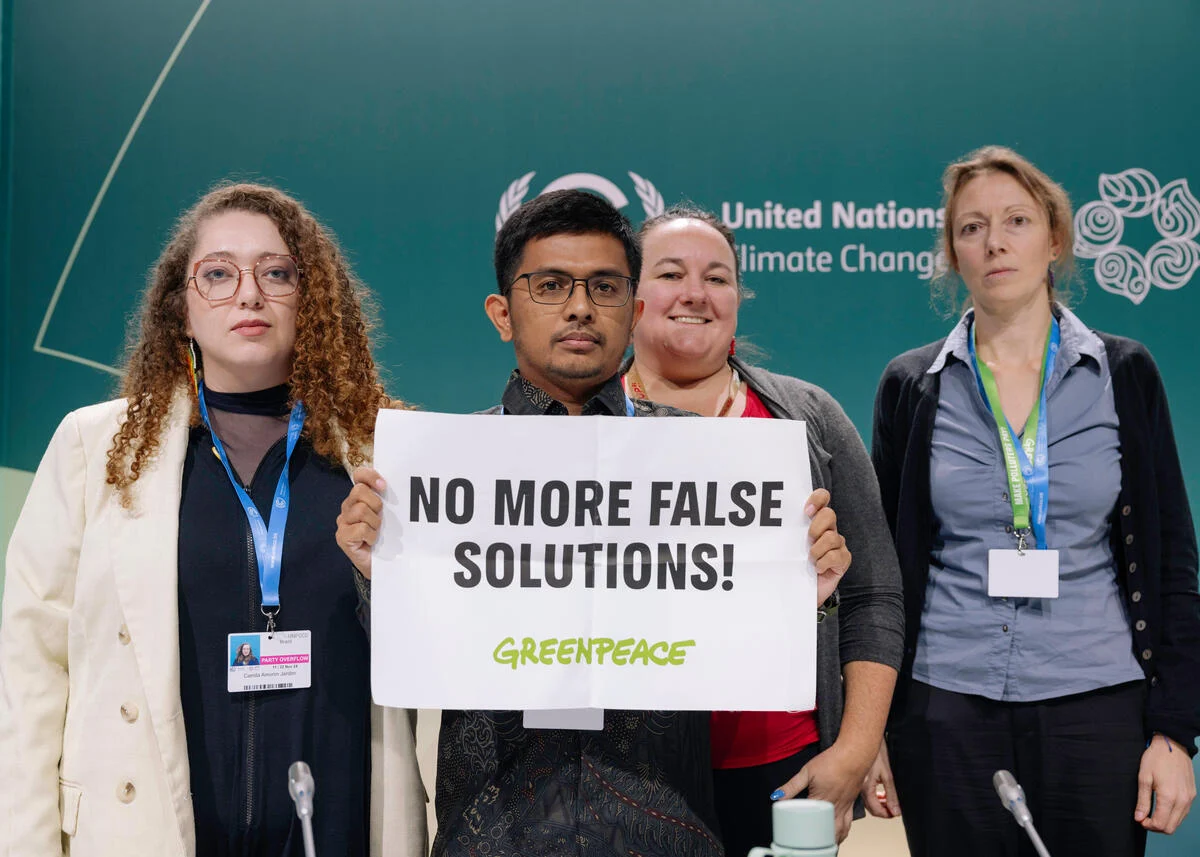
Camila Jardim, Iqbal Damanik and An Lambrechts hold up a hand banner after a Greenpeace press conference at COP29. PHOTO/GREENPEACE.
Greenpeace said closer coordination between the global environmental agreements was essential to ensure that policies addressing climate change and biodiversity loss reinforced rather than undermined one another.
Camila Jardim, international political expert at Greenpeace Brazil, warned that the world was approaching a potential overshoot of the 1.5°C global warming threshold while facing the threat of a sixth mass extinction.
She said the climate and biodiversity crises were interconnected and required coordinated government action, with clear measures for the short, medium and long term.
Jardim highlighted the importance of protecting primary forests, which play a critical role in maintaining climate stability and safeguarding biodiversity. She also pointed to a Brazil-led roadmap to halt and reverse deforestation and forest degradation by 2030 as an opportunity to strengthen cooperation between the environmental conventions.
She said governments needed to address forest degradation alongside deforestation and ensure that climate and biodiversity commitments worked towards common objectives.
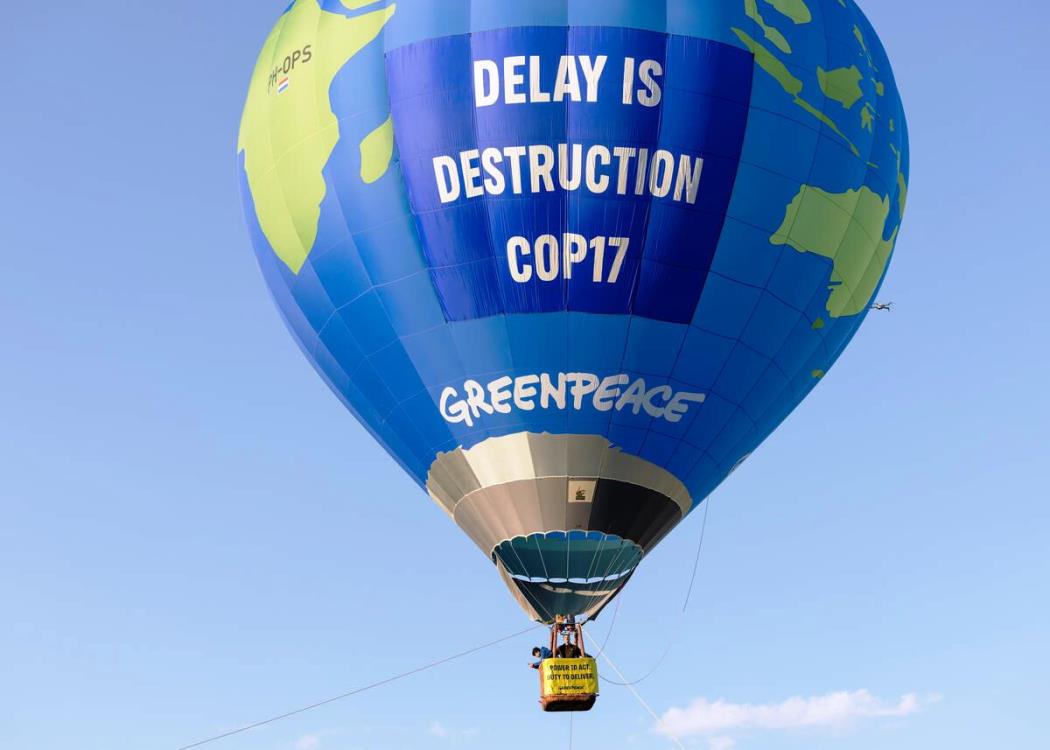
Ahead of the start of government discussions, Greenpeace activists deployed a hot-air balloon carrying the message “Delay is Destruction” in the historic village of Garni, Armenia, in a call for urgent action on biodiversity loss.
The organisation is calling on governments at COP17 to address implementation gaps in the global biodiversity framework through concrete, forward-looking decisions; increase public financing for nature protection; and align economic and fiscal policies with biodiversity goals.
Its proposals include removing harmful subsidies, tackling illicit financial flows and introducing progressive environmental taxation to ensure that those responsible for environmental destruction bear a greater share of the costs.
Greenpeace is also urging governments to improve the quality of conservation and restoration across ecosystems, from the world’s forests to the high seas, while protecting the rights of Indigenous Peoples and local communities.
The organisation says COP17 must ultimately translate global commitments into coordinated action at national and international levels, warning that continued delays risk undermining efforts to protect biodiversity and the ecosystems on which human survival depends.