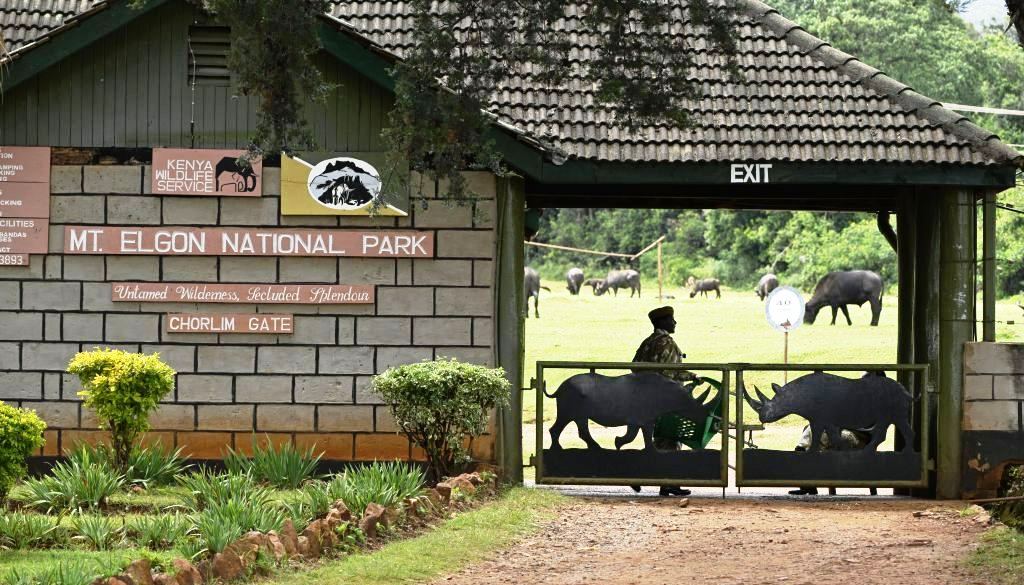


The gate of Mt Elgon National Park. PHOTO/Mt Elgon Foundation/ Kelvin Maima.
By PATRICK MAYOYO
Elephants living on Mount Elgon may be using certain plants to treat illness, according to new research that draws on decades of observations by members of the local Sabaot Indigenous community.
The study, published in Scientic Reports, documents reports of elephants selecting particular plants when they appear unwell, as well as mothers providing plant material to their calves. Researchers describe the behaviour as “putative self-medication”, while stressing that the findings do not yet prove the plants have therapeutic effects.
Researchers worked with eight Sabaot experts, including wildlife scouts, guides and elders with more than 20 years’ experience living in or observing elephants around Mount Elgon. Their accounts identified 35 plant species and four types of soil, minerals or clay reportedly consumed by elephants.
Of the plants, 34 were also recognised by the experts as having traditional medicinal uses among local communities. Twenty-five were perceived to have a medicinal function for elephants.
The researchers identified eight plants as providing the strongest indications of possible medicinal behaviour. In these cases, local experts linked particular plants to specific perceived health benefits in elephants or described plant material being given to another elephant.
Ten plants were among those most frequently mentioned by the experts, and nine of those have previously been reported in scientific literature as having pharmacological activity.
The findings are particularly significant because of Mount Elgon’s unusual elephant population.
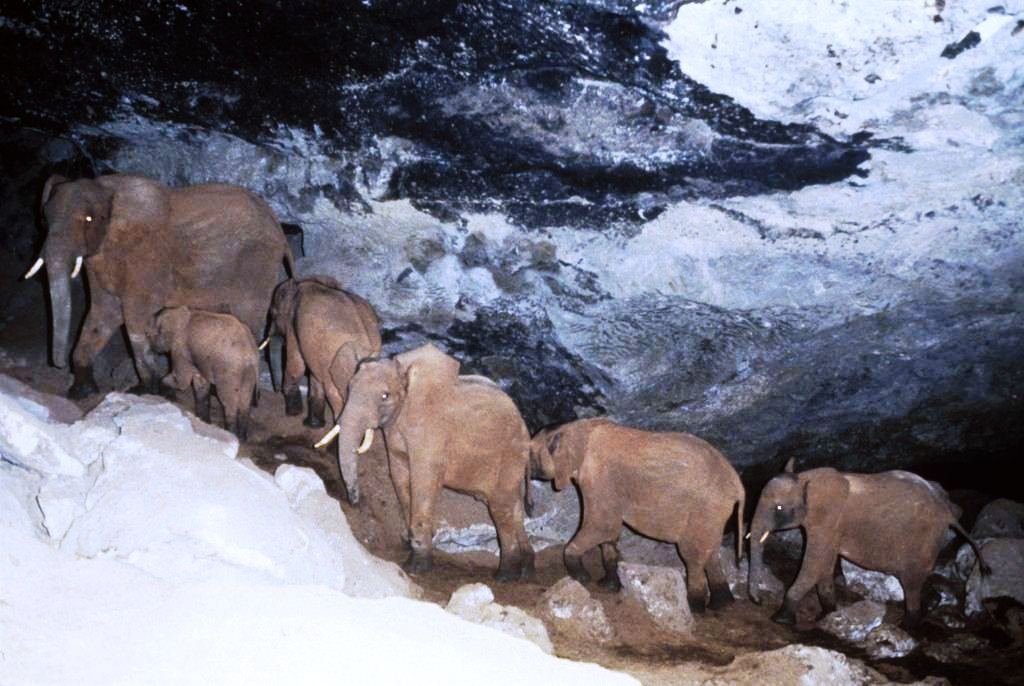
Rising to 4,321 metres (14,177 feet) on the Kenya–Uganda border, the ancient volcanic mountain is home to a small and elusive population of forest elephants. They are renowned for entering caves, sometimes travelling as far as 160 metres underground, and using their tusks to gouge mineral-rich material from the cave walls.
The new research, however, does not conclude that cave mining itself is medicinal or represents self-medication. The reported medicinal behaviours identified by the experts involved plants; mineral and clay consumption was not classified as medicinal in the study.
Dr Fabien Schultz, the study’s lead author, said the findings highlighted the connection between Mount Elgon’s plant life and the health of both elephants and people.
“Reports that elephants use some of the same plants that local communities use in traditional medicine make protecting these habitats a One Health issue,” Schultz said.
He said future research would investigate whether the behaviours are learned or socially transmitted and which plants and locations may be particularly important to protect.
The study also highlights the contribution of Indigenous knowledge to wildlife research. The eight Sabaot participants provided first-hand observations that formed a central part of the research, alongside botanical identification, ethnomedicinal knowledge and existing scientific literature.
Kennedy Ngityo Chemoywo, one of the Sabaot experts involved, said local communities had accumulated knowledge of the mountain and its wildlife long before the arrival of researchers and modern infrastructure.
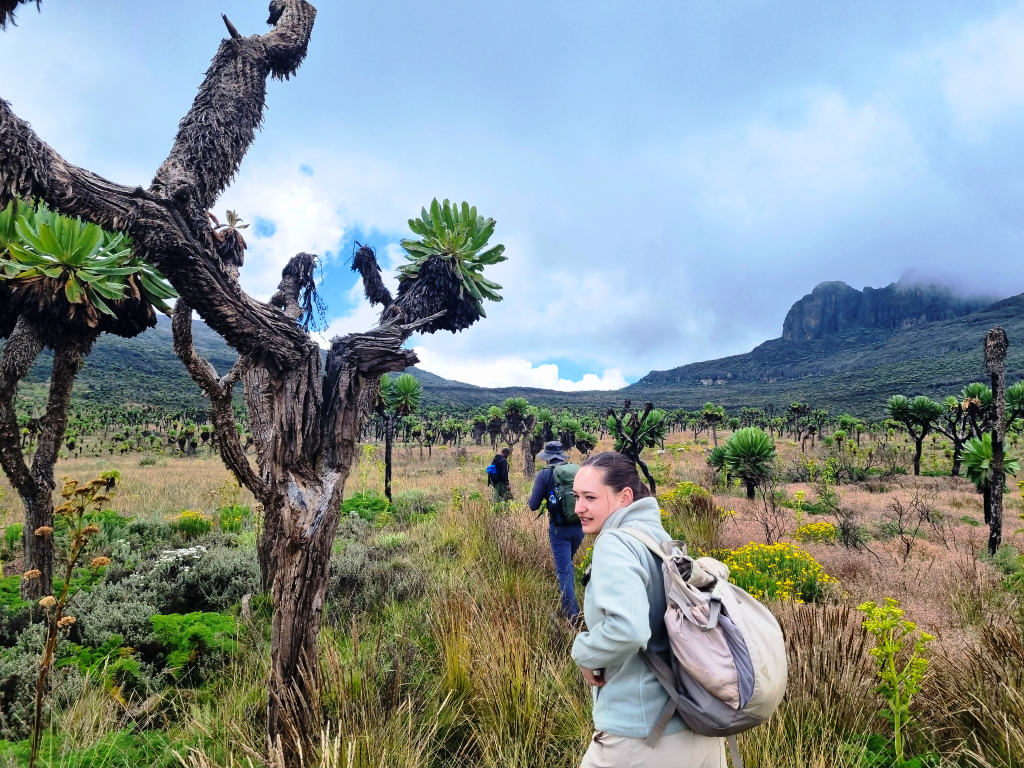
Field research near the summit of Mt Elgon. PHOTO/ EAWLS.
“This is a knowledge that comes from being part of the forest,” he said.
The researchers caution that their study is based on reported observations rather than controlled experiments. They did not directly observe and experimentally verify the reported medicinal behaviours, establish clinical diagnoses or demonstrate that consuming any of the plants produces a therapeutic effect.
Further research could involve direct observation of elephants and laboratory investigation of the plants’ pharmacological properties. Such work will be challenging because the elephants live in dense montane forest and can be difficult to observe, particularly when displaying rare behaviours.
Mount Elgon’s elephants already face pressures including habitat loss and fragmentation, poaching and human–elephant conflict. Researchers say a better understanding of how the animals interact with plants and other natural resources could strengthen efforts to protect both the elephants and the wider ecosystem.
The study, “African elephants putatively self-medicate with medicinal plants in the Mount Elgon region, Kenya”, was authored by Fabien Schultz and colleagues and published in Scientific Reports on 24 September 2026.
The research was carried out with contributions from the Mount Elgon Foundation, Mount Elgon Elephant Project, East African Wild Life Society and National Museums of Kenya.