



President William Ruto and Dangote Group President Aliko Dangote. PHOTO/PSCU.
By PATRICK MAYOYO
No, Mr President. Kenyans who are asking questions about the Dangote East Africa Refinery in Lamu are not extortionists. They are citizens and taxpayers.
They are members of communities whose land, livelihoods, environment and cultural heritage may be affected by one of the biggest industrial projects ever proposed in Kenya. And they have every right to ask questions.
President William Ruto’s decision to dismiss critics of the Sh2.2 trillion Dangote East Africa Refinery as “extortionists” and “brokers” is, in my view, a dangerous distraction from the more fundamental question: was every legal, constitutional and environmental safeguard observed before Kenya celebrated the project’s groundbreaking?
That question cannot be shouted down. It cannot be dismissed as blackmail. And it certainly cannot be answered by a groundbreaking ceremony.
The refinery was officially launched in Lamu on September 30, 2026, with President Ruto and Dangote Group President Aliko Dangote presiding over the ceremony. The proposed refinery is expected to process about 700,000 barrels of crude oil a day and represents a roughly $16 billion investment.
I have no quarrel with investment. I have no quarrel with jobs. I have no quarrel with industrialisation. What I object to is the idea that the bigger the investment, the less scrutiny it should receive.
Big money does not suspend the Constitution. A billionaire’s investment does not outrank Kenyan law. And a presidential groundbreaking ceremony does not retrospectively cure a failure to follow due process.
The starting point is the Environmental Management and Co-ordination Act, 1999.
Section 58(1) requires a project proponent, before financing or commencing an undertaking specified in the Second Schedule, to submit a project report to the National Environment Management Authority (NEMA).
Where NEMA determines that the project may have, or is likely to have, a significant impact on the environment, Section 58(2) requires the proponent to undertake an environmental impact assessment study and prepare a report. That is not a bureaucratic suggestion. It is the law.
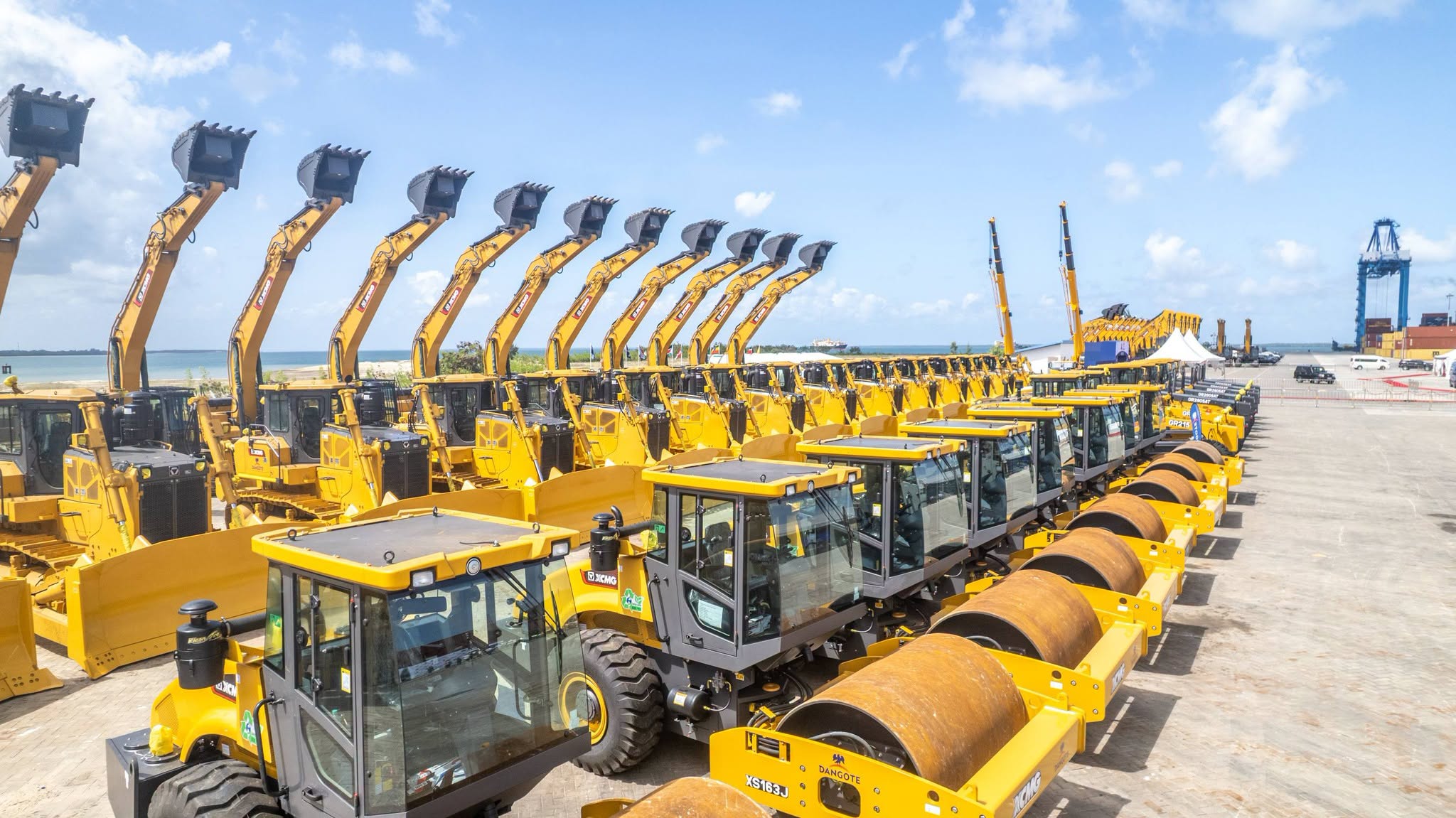
Equipment at the ground-breaking ceremony. PHOTO/PSCU.
And NEMA itself could not be clearer: an Environmental Impact Assessment (EIA) is a legal requirement before commencement of a project, the process requires the proponent to seek the views of people who may be affected, and an EIA licence is to be issued before commencement.
NEMA further states that a proponent or investor should not implement a project for which an EIA is required unless the EIA has been concluded and approved in accordance with the law.
So my question is simple: Where is the environmental assessment? Where is the licence? Where are the documents? Where is the evidence that the public was meaningfully consulted? These are not unreasonable questions. They are precisely the questions the law requires Kenyans to ask.
And for a refinery of this magnitude, the questions become even more important because an environmental assessment is not merely about trees and soil.
NEMA identifies social and human considerations including economic impacts, social disruption, human health, biodiversity and ecosystem protection among matters that should be considered in an EIA.
That is why I would rather talk about the environmental and social consequences that must be assessed through the applicable EIA or Environmental and Social Impact Assessment (ESIA) framework than pretend that a project of this scale can be reduced to a question of investment figures and jobs.
The Constitution is equally clear. Article 10 makes “participation of the people” a national value and principle of governance and binds State organs, State officers, public officers and all persons whenever they apply or interpret the Constitution, enact or apply law, or make or implement public policy decisions.
This is not a decorative phrase inserted into the Constitution to make government documents look democratic. It is a constitutional obligation.
And Article 35 gives every citizen the right of access to information held by the State. It also requires the State to publish and publicise important information affecting the nation.
So when Kenyans ask to see the agreements, approvals, ownership structures, environmental documents, land arrangements and other records underpinning a Sh2.2 trillion project, they are not asking for a favour.
They are asking to exercise a constitutional right. What exactly is the government asking Kenyans to trust? This is where transparency becomes unavoidable.
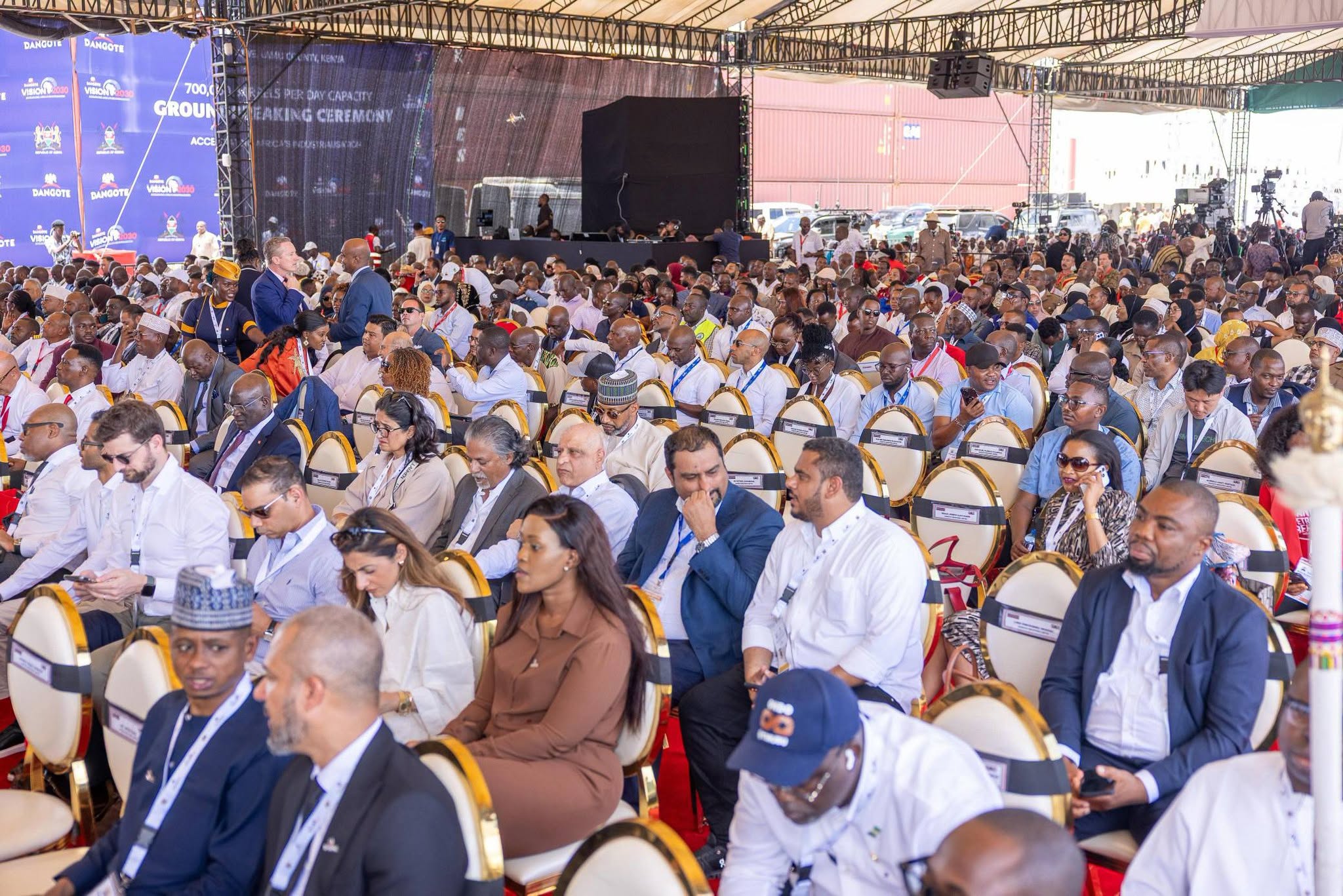
Members of the public at the ground-breaking ceremony. PHOTO/PSCU.
Kenyans want to know the contractual architecture behind the refinery. They want to know what Kenya has committed. They want to know what Dangote has committed. They want to know who ultimately owns and controls the Kenyan project company.
They also want to know what land has been allocated, on what terms and after what process. They want to know how affected residents will be compensated, what environmental safeguards have been approved and what obligations the investor has to local communities.
I also want to know what the Kenyan people receive in return for the land, infrastructure, public support and regulatory approvals being deployed around this project.
These questions have become even more urgent because the refinery groundbreaking occurred against the backdrop of a live land dispute. On September 25, 2026, the Malindi Environment and Land Court ordered the parties to maintain the status quo concerning disputed land associated with the project, following a case brought by 133 residents. The matter is scheduled for further hearing on October 14.
The court order did not stop the ceremonial groundbreaking. But its existence should have made everyone pause and ask a basic question: Why are we celebrating first and resolving the outstanding legal questions later?
There is another issue that I cannot ignore and which has already been raised by Linda Mwananchi leader and Nairobi Senator Edwin Sifuna. President Ruto took the constitutional Oath of Allegiance and the Oath of Due Execution of Office.
Under the Oath of Allegiance, the President swears or solemnly affirms that he will “obey, preserve, protect and defend” the Constitution and all other laws of the Republic.
Under the Oath of Due Execution of Office, he swears or solemnly affirms that he will serve the people and the Republic of Kenya and perform his functions in accordance with the Constitution and the laws of Kenya, “without fear, favour, affection or ill-will.”
Those oaths are prescribed in the Third Schedule pursuant to Article 141(3) of the Constitution. They are not ceremonial poetry. They are a constitutional commitment.
So when Kenyans ask whether the Lamu refinery process has complied with Kenyan law, they ate not attacking the President personally. They are asking him to live up to the very constitutional oath he took.
If the project has complied with every requirement, then publish the evidence and let the documents speak. There is an additional reason why this project demands extraordinary scrutiny.

President William Ruto and Dangote Group President Aliko Dangote walking towards the venue of the Dangote East Africa Refinery ground-breaking ceremony in Lamu. PHOTO/PSCU.
Lamu is environmentally and culturally sensitive. Lamu Old Town is a UNESCO World Heritage site, and the wider area has a distinctive ecological, cultural and social character. That makes questions about land, marine ecosystems, fishing, heritage, livelihoods and cumulative industrial impacts particularly serious.
This is why development in Lamu cannot be judged merely by the number of barrels the refinery will process or the number of jobs politicians promise. Development has to be sustainable. It has to respect communities. It has to respect the law. And it has to protect the rights of future generations.
Let me be clear: if somebody is demanding money from an investor in exchange for withdrawing a legitimate objection, that is a matter for the law. But a citizen filing a court case over land is not automatically an extortionist.
A journalist asking to see government contracts is not automatically an extortionist. A resident demanding compensation is not automatically an extortionist. An environmentalist demanding an assessment is not automatically an extortionist.
A senator demanding disclosure of public information is not automatically an extortionist. And a Kenyan asking whether the government followed the law is certainly not an extortionist.
Calling every critic a broker or extortionist does not answer the criticism. It merely changes the subject. The real issue remains: show us the paperwork.
Lawyer Dr Ekuru Aukot has called for disclosure of documents relating to the project, including the contract between the Government of Kenya and Dangote East Africa Refinery and Petrochemicals SEZ and information on the company’s beneficial ownership.
He has also sought details of the company’s directors, CR12 records for locally incorporated corporate shareholders, corresponding records for foreign corporate shareholders, constitutional documents of relevant corporate shareholders and information identifying the ultimate beneficial owners.
Those requests go to the heart of transparency. Who owns the company? Who controls it? Who sits on its board? What exactly has Kenya agreed to? What obligations have been assumed? What benefits have been secured for Kenyans? And what happens if the project fails to deliver what has been promised?
These are reasonable questions for a project of this scale. The refinery could potentially transform Kenya’s energy sector and Lamu’s economy.
The project is expected to create major employment opportunities, expand industrial capacity and strengthen regional energy security. The government has presented it as a flagship investment capable of transforming Kenya’s economic fortunes.
I do not dismiss those possibilities. But neither should we allow the promise of prosperity to become an excuse for procedural shortcuts. Kenya does not have to choose between investment and the rule of law. We can have both. Indeed, we must have both.
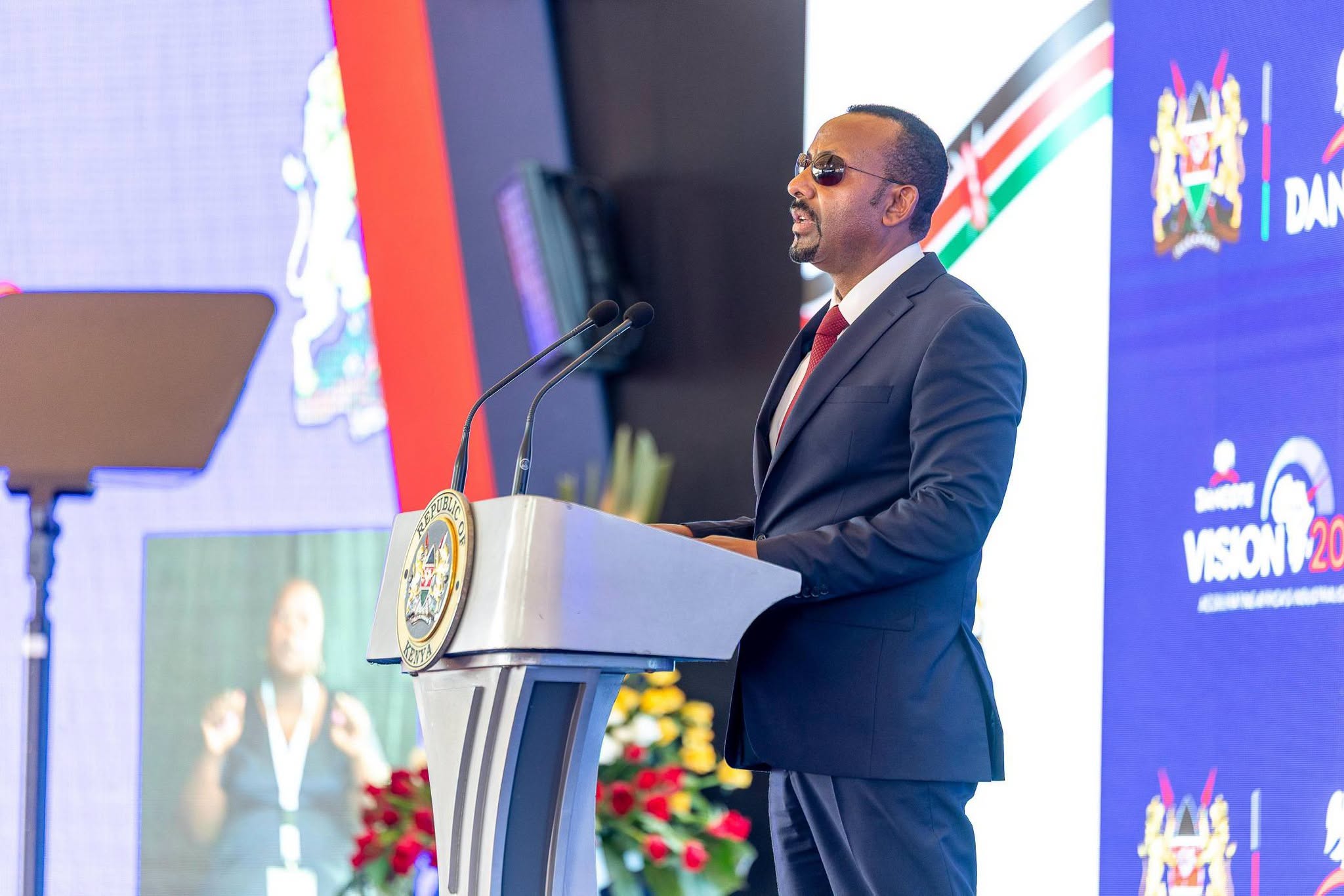
Ethiopia Prime Minister Abiy Ahmed speaking at the ground-breaking ceremony of the Dangote East Africa Refinery in Lamu. PHOTO/PSCU.
A serious investor should welcome a transparent regulatory process because it gives the investment certainty and legitimacy. A serious government should welcome scrutiny because it demonstrates that its decisions can withstand examination. That is how sustainable investment works.
President Ruto has repeatedly presented the refinery as evidence that Kenya is open for serious investment. Then let Kenya demonstrate that it is also open to serious scrutiny.
Let NEMA publish the relevant environmental approvals. Let the government publish the agreements it is legally able to disclose. Let the public understand the land arrangements. Let affected communities understand their rights. Let the environmental and social safeguards be independently scrutinised. Let the courts determine the disputes before them.
And let Kenyans see the ownership and beneficial-control structure behind a project that will have consequences far beyond the ground-breaking ceremony.
That would silence far more critics than presidential denunciations ever could. Because transparency is not the enemy of investment. Transparency is what gives investment legitimacy.
The Dangote refinery may indeed become one of the most consequential industrial projects in Kenya’s history. But its legacy should not be that Kenya learned to bend its rules whenever the cheque was big enough.
Its legacy should be that Kenya proved something more important: that even the biggest investor must obey Kenyan law; that even the most powerful government must answer to the Constitution; and that even the poorest citizen has the right to ask questions about a project that may change the future of his or her community.
That is not extortion. That is citizenship. That is accountability. And that is what constitutional democracy looks like. The refinery can have billions. The President can have power. Dangote can have global influence.
But none of them is above the law.