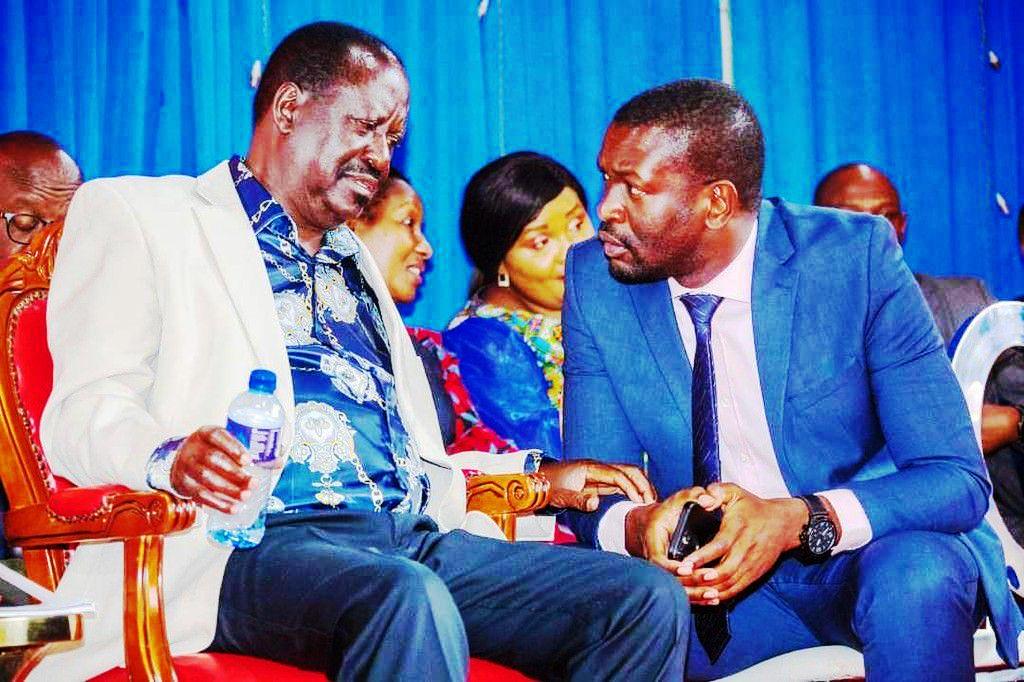


The late ODM party leader Raila Odinga with the then ODM Secretary General and now Linda Mwananchi Movement leader Edwin Sifuna. PHOTO/UGC.
By PATRICK MAYOYO
I have followed Nairobi Senator Edwin Sifuna’s political journey with keen interest since his election to the Senate and subsequent appointment as Secretary-General of the Orange Democratic Movement (ODM).
I have watched him navigate the treacherous waters of Kenyan politics, confront powerful adversaries and challenge even those within his own then political family (ODM).
Yet, of all the lessons he appears to have learnt along the way, one stands out: the ability to remain calm when the political ground beneath his feet is shifting, to think several moves ahead and to keep his cards close to his chest.
It is for this reason that I have come to regard Sifuna as one of the most accomplished students to emerge from the political school of the late ODM political dynamo Raila Amolo Odinga.
The most fascinating lesson Sifuna has demonstrated is that political battles are not always won by the loudest voice in the room. Sometimes, victory belongs to the person who understands the battlefield well enough to know when to speak, when to remain silent and when to make a move that changes everything.
That lesson became particularly evident as the deadline approached for political parties to submit the names and specimen signatures of officials authorised to represent them in electoral matters ahead of the 2027 General Election.
Suddenly, the question of which political party Sifuna would use to pursue his presidential ambitions became a subject of intense speculation. His supporters were anxious. His critics were watching expectantly. Political rivals appeared convinced that the doors to his presidential ambitions were closing one after another.
First came reports that Sifuna would contest on the ticket of a new outfit called the Ukombozi People’s Party. There were claims that he had secured the United Democratic Party, associated with the late Lugari MP Cyrus Jirongo, and intended to rebrand it. But the proposed name change ran into regulatory difficulties, while individuals associated with the party challenged the alleged takeover and changes to its leadership.
Then came another possibility. Embakasi East MP Babu Owino was reported to have secured the Muungano Party, associated with former Makueni Governor Professor Kivutha Kibwana, with plans to rebrand it as the Mwananchi Party. Other names, including Kakamega Senator Boni Khalwale’s United Patriotic Movement and Saboti MP Caleb Amisi’s People’s Renaissance Movement, entered the conversation.
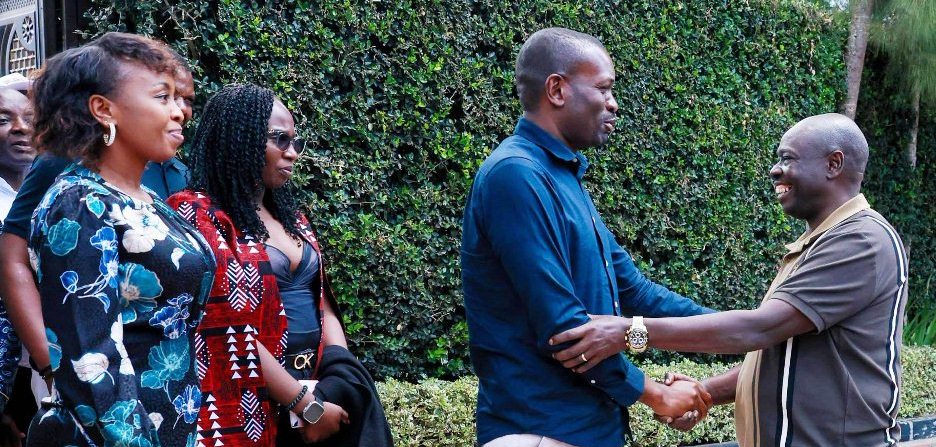
Linda Mwananchi party leader and presidential aspirant Edwin Sifuna with DCP leader Rigathi Gachagua at his Wamunyoro residence. PHOTO/UGC.
Every new development seemed to produce another question. Every possible escape route appeared to lead to another political complication.
But beneath the noise, a more fundamental problem was emerging. Some of the parties being discussed were reportedly not duly registered under the names being proposed, while others had links to the Azimio la Umoja–One Kenya Coalition. Joining a coalition party would not necessarily give Sifuna the freedom to pursue his own presidential ambitions.
Unbeknown to many Sifuna supporters, section 22 of the Azimio la Umoja–One Kenya Coalition agreement provided that the Azimio party leader was the automatic presidential candidate. And as they say that was a catch-22 situation.
To Sifuna supporters, the situation looked increasingly desperate. To his opponents, it may have appeared that the political trap was closing. Then Sifuna did something that, in retrospect, revealed the difference between a politician reacting to events and a strategist shaping them.
He called a crisis meeting. Those around him wanted answers. Which party would he use? Had every option been exhausted? Was the 2027 presidential dream about to be extinguished before it had properly taken flight?
Sifuna remained composed. He assured his team that he had a party and would unveil it before the deadline. He offered no elaborate explanation and revealed no name. He simply projected the confidence of a commander who could see a way out of a battlefield that appeared surrounded.
The code name for that operation might as well have been Silence. Then came the revelation. On 4 October 2026, at Nairobi’s New Stanley Hotel, Sifuna unveiled The Equitable Party (TEP) and declared his intention to contest the presidency in the 2027 General Election.
The announcement transformed the conversation. What had seemed an increasingly narrow political corridor suddenly opened into a new possibility.
I found myself reflecting on Raila and the kind of political education he imparted to the younger leaders around him. I began to understand why he had entrusted Sifuna with the demanding responsibility of serving as secretary-general of one of Kenya’s most influential political parties.
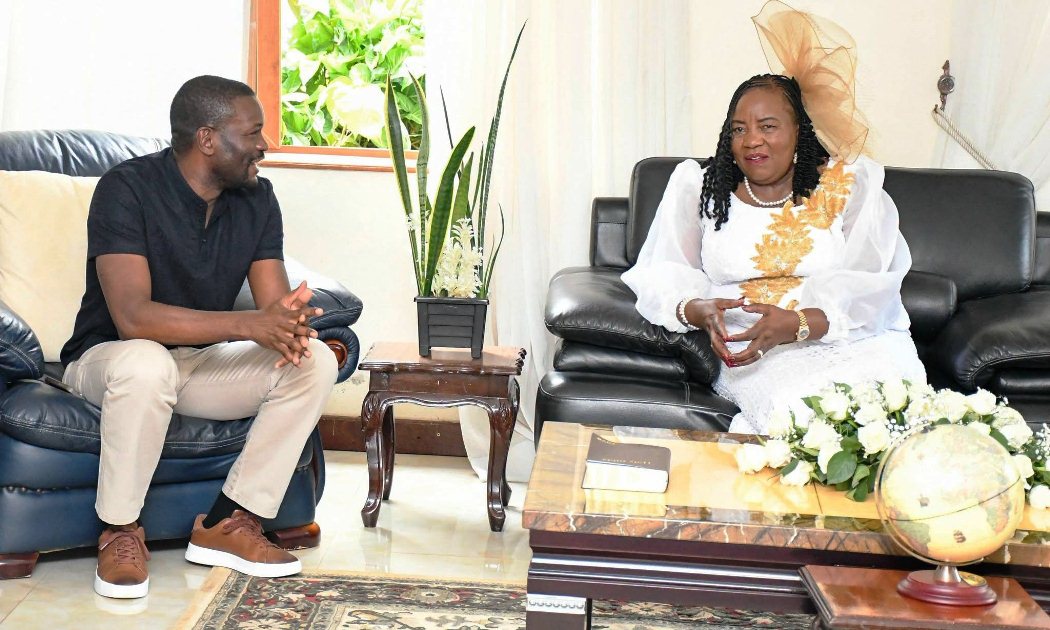
Sifuna with Ida Odinga, widow of the late ODM leader Raila Odinga, at a first anniversary commemoration in Bondo. PHOTO/UGC.
Those who worked closely with Raila often spoke of his extraordinary ability to read a crisis. There are accounts of him sitting quietly during tense meetings, sometimes appearing almost detached, only to intervene at the decisive moment with an observation that changed the direction of the discussion.
That was part of Raila’s genius. He understood that political intelligence was not simply about knowing what everyone else knew. It was about recognising what others had failed to see.
People familiar with Sifuna’s political operations have described a similar instinct. When he smiles during a difficult meeting, they suggest, he may already have identified a possibility that has escaped everyone else.
Whether one agrees with every decision Sifuna makes or not, his handling of the party question demonstrated the value of preparation, discretion and strategic timing.
Raila was trained as an engineer, not a political scientist. Yet he became one of Kenya’s most formidable political strategists and tacticians, a man whose influence frequently extended far beyond the formal offices he occupied. He understood institutions, negotiations, alliances, public sentiment and the delicate arithmetic of power. Sifuna appears determined to apply some of those lessons in his own political journey.
Before his death in October 2025, Raila had mentored numerous young politicians. Some became MPs, senators, governors, members of county assemblies, Cabinet Secretaries and principal secretaries.
The unfolding crisis within ODM is exposing a deeply troubling reality: Raila may have been surrounded by political opportunists, self-seekers and political scavengers who were more interested in exploiting his name, stature and influence than defending the principles he stood for.
Some of those who enjoyed power, privilege and political relevance under his leadership now appear more concerned with securing their own political survival than protecting the legacy of the man who helped build their careers.
The question is whether they were genuinely committed comrades in a shared political struggle or merely ambitious individuals using Raila’s political capital as a stepping stone to personal advancement.
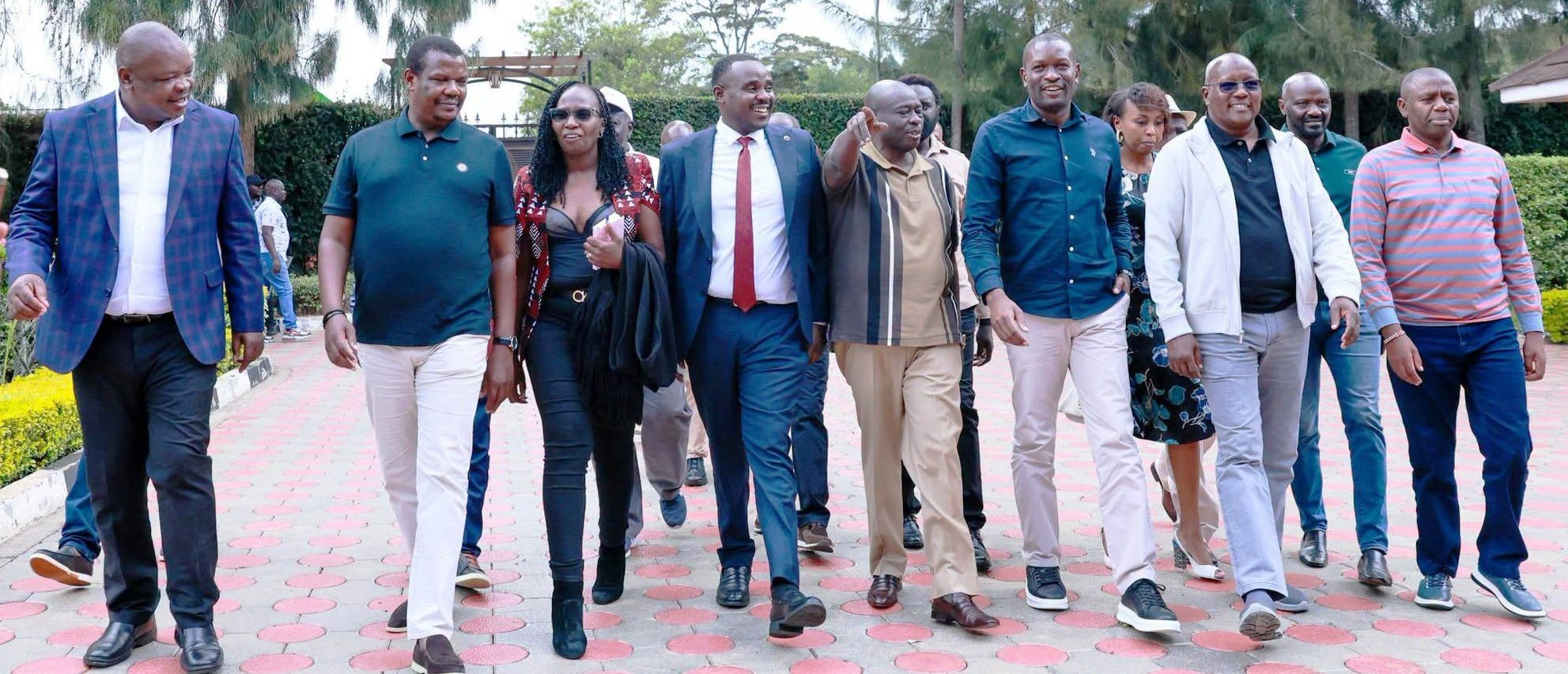
DCP leader Rigathi Gachagua with Sifuna and other Linda Mwananchi leaders at his Wamunyoro residence. PHOTO/UGC.
But Sifuna has increasingly attracted attention because his political choices appear to reflect a struggle over something larger than personal advancement: the identity and future of the spirit of Raila and his ODM dream.
Raila’s political life was built around the pursuit of multi-party democracy, constitutional reform, accountability, social justice and a more equitable distribution of national resources. His years of detention and political struggle made him a symbol of resistance for millions of Kenyans who believed that the country could become more democratic and inclusive.
The 2010 Constitution, with its commitment to devolution and the dispersal of power, represented an important milestone in that broader struggle. ODM, which emerged as a major political force from the 2005 constitutional referendum campaign, became an institutional home for many of these aspirations.
For years, the party presented itself as a vehicle for reform, a counterweight to established power and a platform through which citizens could demand accountability from those who governed them.
It is against this history that Sifuna’s disagreements with sections of ODM’s leadership must be understood.
Before he founded Linda Mwananchi ODM-splinter group he had argued that ODM must not surrender its identity as an opposition movement by becoming a junior partner in President William Ruto’s Kenya Kwanza administration. He had insisted that the party should preserve its independence and field its own presidential candidate in 2027.
For younger supporters in particular, this position has become a test of political fidelity. Can a party founded on resistance and reform retain its soul if it becomes too closely associated with the establishment it once challenged?
Sifuna’s confrontation with those in ODM who favoured cooperation with Ruto was therefore more than an internal party disagreement. It represented a contest over ODM’s political identity and the meaning of Raila’s legacy.
I believe Raila’s greatest political tragedy would not simply be that he died without becoming President. It would be for the ideals he spent decades defending to be reduced to slogans, invoked during campaigns but abandoned when power and personal interests come calling.
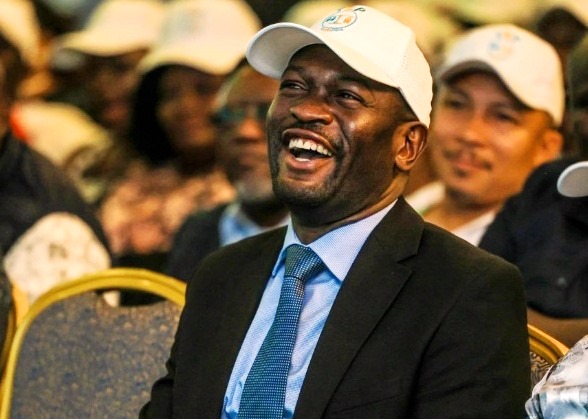
A jovial Sifuna at the unveiling of The Equitable Party (TEP) at the Stanley Hotel in Nairobi. PHOTO/UGC.
Of course, it would be naïve to romanticise every chapter of Raila’s political career. Kenyan politics is complicated, and alliances have often blurred the boundaries between principle and expediency. Yet his enduring significance lies in the fact that he helped shape the country’s democratic conversation and gave generations of Kenyans a language through which to demand change.
Sifuna’s supporters see him as a defender of that tradition. His willingness to criticise both the government and elements within his former own party has strengthened his image as a politician prepared to challenge authority, even when doing so carries personal and political risks.
His work in the Senate, his outspoken communication style and his ability to connect with younger Kenyans have helped him establish a distinct political identity. His slogan, Mimi Ndio Sifuna, has also inspired the response Sisi Ndio Sifuna among supporters who identify with his message.
There is something politically significant about that transformation. A slogan that begins as a politician’s personal declaration becomes more powerful when supporters turn it into a collective statement. It suggests that they see their own frustrations, hopes and aspirations reflected in the person they are endorsing.
Yet charisma, slogans and political manoeuvring are not enough to govern a country. The presidency demands far more than the ability to outwit rivals, command public attention or survive party intrigues. It requires sound judgement, administrative competence, economic understanding, respect for institutions and the ability to bring together citizens with competing interests.
This is where the idea of statecraft becomes important. Statecraft is the art of exercising public power wisely: understanding institutions, managing competing interests, conducting negotiations, protecting national interests and making strategic decisions in pursuit of national objectives. Raila understood these dimensions of politics and remained influential for decades, even without occupying State House.
Sifuna’s emerging political journey suggests that he understands at least one essential lesson: power is not merely about obtaining office. It is also about understanding the rules, institutions and relationships through which power is exercised.
That brings me to what I consider the most consequential development in Sifuna’s political messaging.
For decades, Kenyan presidential campaigns have revolved around promises. Candidates arrive with manifestos thick enough to require their own briefcases. They promise roads, dams, hospitals, markets, stadiums, affordable housing, jobs and billions of shillings in investment.
Then the election passes, governments change, and the promises are repackaged. Some are fulfilled, some are abandoned, some are renamed, while others disappear into the great Kenyan political graveyard of tutafanya; we shall do it.
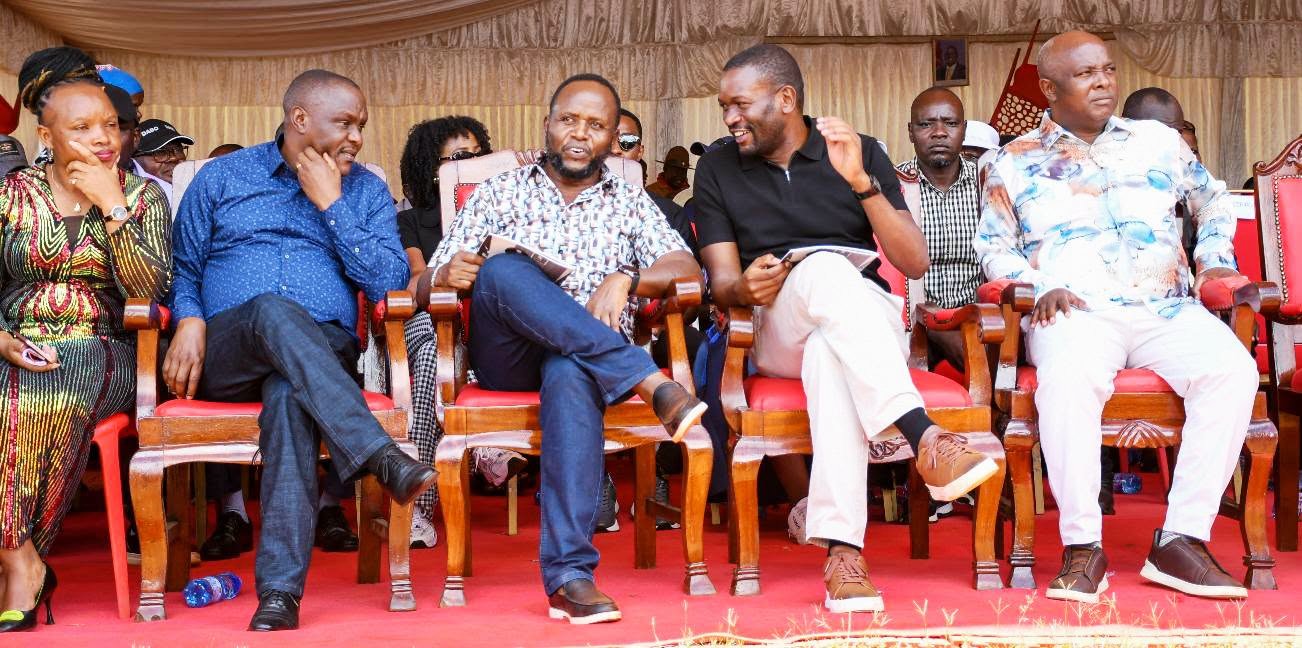
Sifuna with Trans Nzoia Governor George Natembeya, Vihiga Senator Godfrey Osotsi and other leaders at a past event. PHOTO/UGC.
Sifuna’s constitutional emphasis offers a different way of framing the national debate. Instead of asking only what a presidential candidate promises to build, Kenyans should also ask how that candidate intends to exercise power. The distinction is fundamental.
Article 10 of the Constitution of Kenya, 2010, binds public institutions and officers to national values and principles of governance, including the rule of law, democracy, public participation, human dignity, equity, social justice, human rights, integrity, transparency, accountability and sustainable development.
These are not decorative words intended to beautify speeches. They are constitutional obligations.
A government can announce impressive projects while disregarding public participation, mismanaging public resources or weakening accountability. It can promise prosperity while citizens struggle to understand how decisions affecting their lives are made. Development matters, but so does the manner in which it is pursued.
If the 2027 election becomes another auction of development promises, an incumbent president will naturally enjoy the advantage of controlling the machinery of government and pointing to ongoing projects, new programmes and public investments.
But what happens if voters begin asking a different question? Not simply, what will you build for me? But, how will you exercise power over me, and what safeguards will prevent you from abusing it?
That question is far more demanding. It requires candidates to explain how they will respect the Constitution, protect public resources, strengthen independent institutions and ensure that citizens can hold their leaders accountable.
It is also a question that cannot be answered with a slogan alone. Anyone seeking the presidency must demonstrate how constitutional principles will translate into practical governance and measurable improvements in people’s lives.
This is where Sifuna’s political project will ultimately be tested. His ability to navigate party politics may have demonstrated tactical intelligence, but the challenge of national leadership is on another scale entirely.
Can he turn constitutional fidelity into a convincing economic programme? Can he build a broad national coalition without abandoning his principles? Can he transform youthful enthusiasm into a credible governing agenda that speaks to the farmer, the worker, the trader, the unemployed graduate and the struggling family?
These are the questions that will determine whether he is merely an accomplished political tactician or a serious contender for national leadership.
For now, I see in Sifuna a politician who has learnt important lessons from Raila Odinga’s school of politics: patience, timing, strategic thinking, courage in confrontation and an appreciation of the institutions through which power operates. But the ultimate examination is still ahead.
Raila’s legacy cannot be inherited simply by occupying a prominent political position, invoking his name or mastering the techniques of political survival. It must be earned through conduct, public service and an unwavering commitment to the democratic ideals he championed.
Sifuna has demonstrated that he knows how to survive a political storm. Whether he can build a credible national alternative, govern responsibly and deliver on the promise of a more just Kenya remains to be seen.
And that, perhaps, is the most important lesson from Raila Odinga’s Academy of Politics: the real test of a student is not how brilliantly he performs in the classroom, but what he does when the examination begins.
For Sifuna, the examination of 2027 is approaching. The political chessboard has been set. The public is watching. And the country is waiting to see whether the man who learnt to anticipate the next move can persuade Kenyans that he is ready to help determine the nation’s future.
The writer is an editor at Eyewitness Media Group.